
China Best Roof Valley Flashing Suppliers & Exporters

Precision-Engineered Architectural Drainage Profiles, High-Strength Metal Substrates, and Turnkey Waterproof Envelope Systems for Global Commercial and Industrial Projects.

Engineered Solutions

High-Performance Structural Cladding & Drainage Line

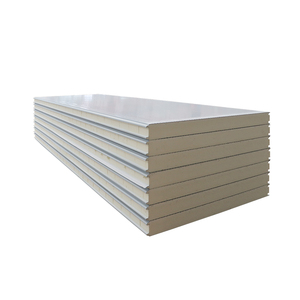
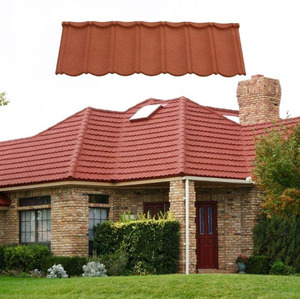
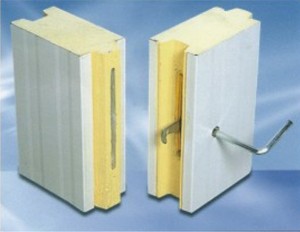
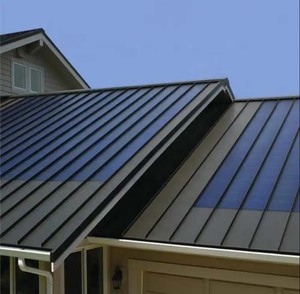
Comprehensive portfolio of precision-formed roofing profiles, stone-coated assemblies, insulated sandwich cores, and modular roll-forming solutions engineered to meet rigorous international envelope standards.
10,000m²
Daily Production Capacity
550+
Mega Projects Delivered
50Yrs
Engineered Design Lifespan
100%
QC Batch Traceability

Architectural Dynamics: The Critical Engineering of Roof Valley Flashings

In high-performance building envelope systems, roof valleys are exposed to the highest hydraulic stress and volume of runoff across the entire roof structure. When two pitched roof planes meet, the intersection creates a critical water collection channel. If this channel is compromised by inferior metals, micro-cracking at bend radiuses, inadequate zinc coverage, or galvanic incompatibility, catastrophic water penetration inevitably follows.

As leading Chinese manufacturers and global exporters of cold-formed flashings, we engineer every roof valley profile to exceed severe weather demands—including coastal marine humidity, heavy cyclic monsoon precipitation, and intense thermal expansions characteristic of equatorial environments. We formulate roof valley flashings from structural-grade Galvalume (Alu-Zinc AZ150/AZ200), marine-grade aluminum alloys, and PVDF-coated galvanized steel with yield strengths calibrated precisely between 250 MPa and 550 MPa.

Hydraulic Sizing and Structural Form Factor Considerations

The transition from generic flashing trims to engineered architectural water-diverters requires precise calculations based on catchment area, rainfall intensity, and valley slope:

  • Open Valley Profiles with Standing Rib Breaks: Engineered with a central V-crimp or splash rib (typically 20mm to 35mm in height) that disrupts turbulent water flow, preventing high-velocity runoff from one roof slope washing up underneath the counter-slope shingles or metal panels.
  • Concealed or Closed-Cut Flashing Systems: Integrated with pre-hemmed lateral returns that anchor securely into secondary support structures, purlins, or sub-girts using concealed clips rather than penetrative surface fasteners, eliminating capillary draw vulnerabilities.
  • Micro-Radius Precision Bending: Utilising CNC hydraulic folding lines calibrated to produce bending radii no sharper than 1.5 times the sheet thickness, preventing stress corrosion cracking (SCC) of the protective passivated zinc-aluminum layer.

Substrate Metallurgy & Chemical Coating Architectures

Standard flashing products often deteriorate at the drip line due to edge corrosion. As specialized exporters, we subject our structural flashing strips to advanced surface treatment regimes:

  • Alu-Zinc (55% Al, 43.4% Zn, 1.6% Si): Provides dual protective action: galvanic self-healing sacrificial protection from zinc, combined with the microscopic barrier resistance of aluminum oxide.
  • Multi-Layer Coating Matrices: Hot-dip galvanized or galvalume coils pass through a continuous chemical pre-treatment, followed by a corrosion-inhibitive epoxy primer (5–7 microns), finished with high-durability polyester (HDP), fluoropolymer (PVDF Kynar 500), or ultra-thick polyurethanes (PU 50 microns) for marine exposure classes (C4 to C5-M).
  • Thermal Elasticity: High flexibility ratings (T-bend test values ≤ 2T without micro-fracturing) guarantee that cold-formed hems and expansion locks will not crack under diurnal thermal shocks fluctuating from -20°C to +85°C.
Forward Outlook

Future Procurement Trends in Industrial & Commercial Roofing

Strategic purchasing protocols for roof flashings, metal envelope decks, and insulated structural panels are transitioning toward smart, sustainable, and hyper-customized manufacturing paradigms.

Integrated Envelope Specification

Global general contractors no longer procure flashings, sandwich panels, and cold-rolled purlins from disconnected vendors. Procurement is shifting to unified single-source envelope packages—ensuring exact colorimetry matching, identical coating lifespans, and zero galvanic reactions between fasteners, panels, and drainage trim.

On-Site Mobile Roll-Forming Integration

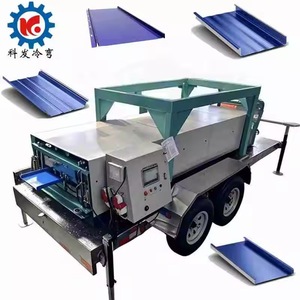
To eliminate shipping damage and geometric constraints on long valley runs, contractors increasingly deploy portable CNC roll formers directly to job sites. Raw coils of heavy-gauge pre-painted galvalume are slit and profiled on-site, enabling joint-free flashings spanning in excess of 15 meters for massive industrial warehouses.

EPD & Carbon Border Compliance (CBAM)

International environmental directives mandate certified Environmental Product Declarations (EPDs). Future procurement focuses on low-carbon steelmaking, high scrap-ratio metallurgy, and chrome-free chemical passivation that comply strictly with European, American, and Gulf sustainability metrics without sacrificing 50-year longevity.

Enterprise Superiority

Why International Procurement Leaders Partner With Us

Combining heavy industrial roll-forming infrastructure with precision metallurgical quality control, we solve the engineering, logistical, and structural bottlenecks of modern architecture.

End-to-End Vertical Manufacturing

From uncoiling, slitting, multi-stage cold roll-forming, and press-brake profiling to automated continuous sandwich panel lines, every component is manufactured within our own facilities to ensure micro-tolerance conformity across large batch orders.

Rapid Turnaround & Direct Export Readiness

With an operational daily output reaching 10,000 square meters of composite insulated panels and auxiliary metal profiles, project lead times are minimized. Specialized seaworthy packing—including anti-friction interleave films, moisture desiccant, and steel-frame pallets—guarantees factory-pristine delivery.

Engineered for Extreme Climates

Whether resisting coastal marine salinity, high-altitude UV radiation degradation, or desert sandstorms with ambient temperatures surpassing 45°C, our specialized PVDF/SMP coatings and closed-cell PIR/PUR cores ensure long-term thermal integrity and structural water-tightness.

Technical Q&A

Frequently Asked Questions on Roof Flashings & Envelope Procurement

Essential technical, operational, and commercial insights for consultants, quantity surveyors, and project engineers.

What are the optimal steel gauges and coating specifications for roof valley flashings?
For commercial and industrial installations, structural engineers recommend cold-rolled Galvalume or high-tensile galvanized steel thicknesses between 0.50mm and 0.80mm (26 to 22 gauge). Thin gauges (<0.40mm) risk oil-canning and distortion under cyclic thermal stress. The coating should feature an AZ150 zinc-aluminum metallic barrier (or Z275 galvanized coating) with a minimum 25-micron exterior PVDF or high-durability polyester (HDP) paint system to deliver a 30 to 50-year service life in harsh external environments.
How do open valley flashings compare structurally to closed valley systems?
Open valleys leave an exposed metallic drainage trough (typically 100mm to 200mm wide) with an engineered center inverted-V splash rib. This provides superior hydraulic velocity clearance, drastically reducing the risk of blockages from seasonal debris, dead leaves, and frozen slush. Closed valleys lap roofing tiles or panels continuously across the channel; while cosmetically uniform, closed configurations are prone to localized friction erosion, internal moisture pooling, and accelerated under-panel corrosion.
Can roof valley flashings be custom bent to non-standard roof slopes and pitch angles?
Yes. Utilizing programmable multi-axis CNC hydraulic folding systems, we manufacture valley flashings configured to non-standard structural geometry—including asymmetric slopes where adjacent roof planes exhibit different pitch angles (e.g., a 4:12 pitch intersecting an 8:12 pitch). Profiles can incorporate asymmetrical water-break channels, variable girth dimensions (from 300mm to 1200mm), and internal hems designed to interlock with standing seam sliding clips.
How is galvanic corrosion prevented when mating flashings with dissimilar metal roof panels?
Galvanic corrosion occurs when electrochemically dissimilar metals are in electrical contact in the presence of an electrolyte (rainwater). To prevent failure, our engineering protocols require strict pairing: Galvalume flashings with Al-Zn coated steel sheets, aluminum flashings with aluminum structures, and stainless steel (304/316) for extreme chemical atmospheres. Where dissimilar alloys meet, non-conductive synthetic butyl tapes, high-grade EPDM gaskets, or inert isolator films are factory-applied to eliminate galvanic potential differences.
What quality verification documentation accompanies international bulk shipments?
Every shipment is supported by Mill Test Certificates (MTC) conforming to EN 10204 3.1, verifying chemical melt analysis, yield and tensile strength, and coating mass density. Additional third-party inspection dossiers include dry film thickness (DFT) reports, ASTM B117 salt spray exposure tests, cross-cut adhesion data, and strict dimensional tolerance inspection logs.
What is the standard production and shipping lead time for custom container orders?
Standard production turnaround for containerized orders (typically 1,000 to 5,000 linear meters of custom cold-rolled flashing profiles or combined panel assemblies) ranges between 10 to 18 working days following CAD drawing and coating confirmation. Cargo is packed in reinforced wooden skeleton crates with vapor-barrier protective wrapping and dispatched directly via primary international ports including Qingdao, Shanghai, and Ningbo.

Initiate Your Project Specification & Pricing Review

Connect directly with our engineering sales teams for detailed technical submittals, custom profile design optimization, sample swatches, or FOB/CIF quotation schedules.

Contact Us