
Manufactured using robotic polyurethane continuous injection foaming, CNC laser stainless skin forming, and multi-point perimeter heating barriers. Explore our core cold chain access and structural envelope range.
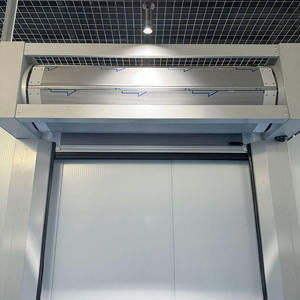
Engineered with zero thermal-bridge PVC structural profiles and 42 kg/m³ high-pressure PUR insulation. Built for food processing chillers and medical blast chambers down to -25°C.
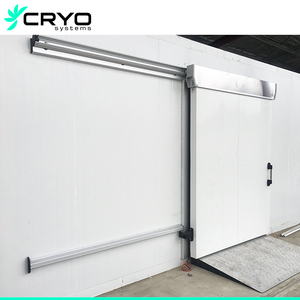
Features self-lubricating nylon guide rollers, heavy extruded anodized aluminum tracking, and heavy-duty EPDM bottom sweeps to eliminate air infiltration under continuous cycles.
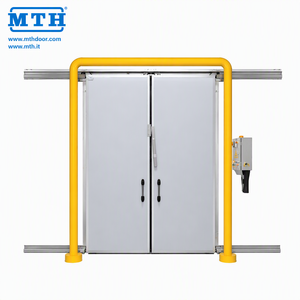
Equipped with an authentic European-grade MTH kinematics track. The door leaf drops inward and down upon closure to ensure an airtight hermetic compression seal with emergency escape lock.
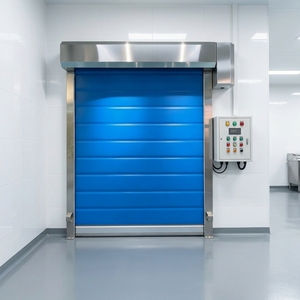
Incorporates an embedded constant-wattage perimeter heating cable within the sub-frame and threshold to prevent frost build-up, gasket freezing, and structural tearing down to -45°C.
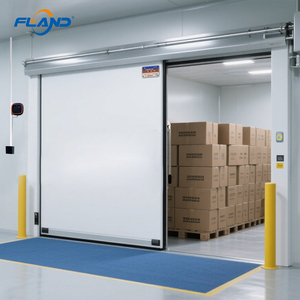
Bi-parting high-speed automated sliding doors engineered for tight intermodal container footprints and walk-in cold rooms. Fast open/close cycle mitigates convective energy escape.
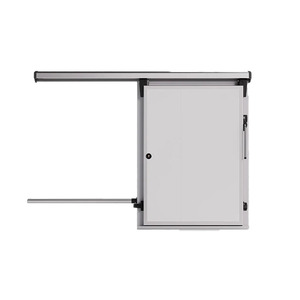
Driven by an intelligent micro-processor rack/belt servo drive. Features soft-start/soft-stop deceleration, radar microwave activation, and pneumatic safety edges for forklift corridors.
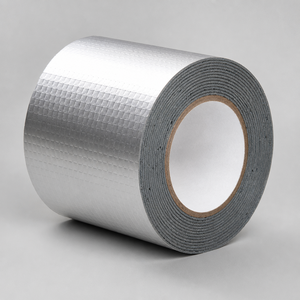
Essential for cold room ceiling and corner joint perimeter flashing. 1.5mm pure synthetic butyl compound stops vapor transmission and thermal bridge migration permanently.
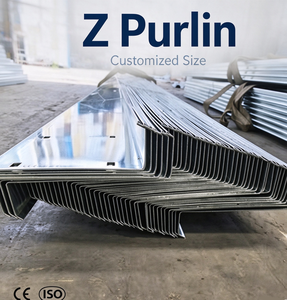
Hot-dip galvanized structural secondary framing (up to 275g/m² zinc). Designed to support cold storage suspended ceilings, exterior cladding spans, and heavy header door tracks.
A cold storage door is not merely a physical partition; it is a dynamic thermal valve operating under severe vapor pressure differentials. When the interior air sits at -30°C and external ambient reaches +45°C with 85% RH, standard architectural doors fail within days due to icing, thermal bridging, and delamination.
Our door leaf frames feature high-modulus, non-conductive rigid PVC extrusion profiles completely isolating the exterior 0.6mm-1.0mm SUS304 or color-coated steel skin from the interior skin. This eliminates thermal conductance, ensuring external surface temperatures remain above ambient dew point and preventing water condensation puddles.
Integrated inside the anodized aluminum jambs and stainless floor threshold lies a dual-circuit 40W/m to 60W/m silicone-insulated heating wire. Operating dynamically or regulated via digital ambient thermostat, this de-icing tracer ensures the EPDM tubular micro-cellular gaskets remain supple and elastic down to -50°C.
Utilizing precision engineered ramp guides, the track moves horizontally during travel, but during the final 50mm of closing travel, the carriage drops downward and inward simultaneously. This compresses the perimeter seals tightly against the insulated casing without dragging or wearing the bottom rubber gasket during transit.
Directly compare leaf thickness, thermal transmittance, drive automation, and envelope duty parameters.
| Door Series | Operating Temp Range | Core Foam Thickness | Thermal U-Value | Track & Hardware System | Heater Circuit | Catalog Inquiry |
|---|---|---|---|---|---|---|
| Chiller Sliding (Manual/Auto) | 0°C to +15°C | 75 mm – 100 mm PUR | 0.28 W/(m²·K) | Heavy Anodized Alum. Rail / POM Rollers | Optional Threshold Wire | Get Catalog |
| Standard Freezer (Manual/Auto) | -18°C to -25°C | 120 mm – 150 mm PIR | 0.17 W/(m²·K) | MTH Patented Kinematic Incline Track | Double Heated Frame + Sill Wire | Get Catalog |
| Deep Cryogenic Blast Freezer | -35°C to -60°C | 180 mm – 200 mm High-PIR | 0.11 W/(m²·K) | SUS304 Structural Heavy Carriage System | Triple 60W/m Constant Circuit | Get Catalog |
| Electric High-Speed Sliding | -25°C to Ambient | 100 mm – 120 mm PUR | 0.20 W/(m²·K) | Micro-Processor Servo / 1.0 m/s Speed | Embedded Resistance Track Trace | Get Catalog |
| Double Leaf Logistics Portal | -20°C to +5°C | 120 mm – 150 mm Composite | 0.18 W/(m²·K) | Synchronized Dual-Drive Overhead Rail | Interlocking De-Icing Frame | Get Catalog |
As cold-chain operators scale up for automated high-bay warehouses and stringent ESG carbon mandates, procurement criteria for sliding freezer doors are pivoting rapidly. Here is how modern facility directors and specifiers are future-proofing facilities.
Environmental regulations are mandating the phase-out of high Global Warming Potential foam expanders. Leading procurement leads now mandate fourth-generation Solstice HFO and Cyclopentane foam formulations. These deliver an initial core lambda below 0.020 W/(m·K) while ensuring B1-s1, d0 non-combustibility and zero ozone depletion.
Modern cold storage operations quantify open-door infiltration penalties down to the kilowatt-hour. Automated electric sliding doors now integrate Modbus/BACnet interfaces that log cycle frequencies, unauthorized manual holds, gasket seal degradation, and power spikes in heating tracers, feeding data directly to Central BMS software.
Warehouse automation demands door opening speeds upwards of 1.2 m/s combined with dual-channel failsafe loop detectors, RFID vehicle identification, and LiDAR curtain barriers. Doors must react within milliseconds to prevent costly forklift mast collisions, using breakaway emergency hardware that protects personnel and assets.
Serving projects across the Middle East, GCC, Africa, and Central Asia, we combine heavy manufacturing infrastructure with extreme-climate engineering standards.
From heavy-duty freezer sliding doors and PIR wall panels to cold-rolled Z/C structural purlins and flashing vapor barriers, buyers acquire complete building envelope packages from a verified single source.
Designed to withstand regional ambient temperatures surpassing +50°C with severe UV and marine salinity exposure. Heavy structural skins, high-performance PVDF coatings, and thermal breaks ensure zero condensation.
We provide complete architectural submittal dossiers: thermal analysis calculations, electrical wiring diagrams, CE / ISO conformity certificates, and structural wind-load charts for expedited consultant sign-off.
Equipped with custom fumigated reinforced steel-framed crate packaging that prevents track deflection and panel bending during ocean transit, supported by multi-country freight routing and logistics partners.
Clear, technically rigorous answers addressing thermal engineering, mechanical loads, installation, and compliance.
Thickness is governed by delta-T (ΔT) between the internal operating room temperature and the maximum peak ambient condition, with an engineering target heat flux of ≤ 8-10 W/m². For chillers (0°C to +4°C) in normal climates, 75mm-100mm PUR suffices. For standard holding freezers (-18°C to -25°C), 120mm-150mm PIR is recommended. For blast freezers (-35°C to -45°C) in high-ambient environments like the Middle East (upwards of +45°C), 150mm to 200mm high-density PIR is required to prevent condensation and keep refrigeration compressors from running continuously.
Traditional flat industrial sliding rails drag the bottom rubber gasket across the floor throughout the entire sliding stroke, creating heavy friction, floor scoring, and premature rubber breakdown. The MTH kinematic system holds the door blade 3-5mm off the floor and away from the perimeter frame during horizontal transit. Only in the final 50mm of travel does the carriage roll down a precision engineered inclined notch, lowering the door leaf downward and pressing it tight inward against the structural frame, creating an airtight compression seal without gasket scuffing.
Whenever the room temperature is designed at or below 0°C (32°F), heated frames are mandatory. Without resistance heat tracing, humidity from the warmer external air migrates toward the cold perimeter gap and condenses. The freezing temperatures then convert this condensation into solid frost, gluing the EPDM gasket to the frame. Forcing the door open under frozen conditions tears the gasket away and bends track linkages. In blast freezers below -25°C, dual heating circuits (independent primary and backup traces) are engineered directly into the frame extrusions and the sub-floor threshold channel.
Yes. When mounting heavy manual or motorized sliding doors directly onto sandwich panel walls, our engineering team supplies heavy structural internal and external matching back-frames ("casing trim"). These distribute the cantilevered load of the overhead track and door leaf across the panel's interior steel skins. For doors weighing over 150 kg or clear openings exceeding 2.5m wide, we coordinate with the structural package to secure the overhead track directly to independent structural steel supports or Z-purlin headers.
Standard white prepainted galvanized steel (PPGI) is suitable for dry logistics and clean ambient zones. However, for meat processing, seafood cold rooms, high-humidity fruit aging, and chemical environments, we recommend either AISI 304 or marine-grade AISI 316 stainless steel with a Scotch-Brite or 2B non-directional finish. Stainless skins provide superior resistance to organic acids, saline wash-downs, and harsh CIP chemical sanitation routines while maintaining pristine hygiene under HACCP and GMP standards.
Our automated electric sliding doors feature a multi-layer safety envelope: 1) A wireless pneumatic or conductive rubber safety edge on the door's leading lip instantly reverses door motion upon encountering any obstruction; 2) Dual through-beam photoelectric infrared sensors positioned at 200mm and 900mm above finished floor level prevent closure when pallets or workers are in the threshold; 3) Microprocessor drive monitoring stops the motor if torque spikes beyond programmed thresholds; 4) An internal mechanical release allows workers inside to unlock and push the door open manually during power cuts.
Request complete engineering datasheets, CAD dimensional installation drawings, structural frame sections, and competitive factory-direct wholesale pricing for your upcoming cold room development.
Our sales engineers respond to project questions during working hours (GST+4).