
Manufactured using advanced continuous roll-forming lines with calibrated high-yield steel coils, high-density insulation materials, and multi-layer corrosion-resistant coatings.
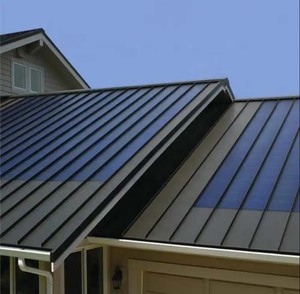
Architectural concealed clip structural roof profile, custom continuous lengths, UV and chemical resistant finishes.
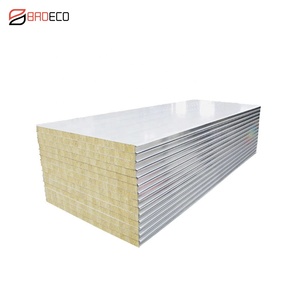
Non-combustible stone wool mineral core (up to 120 kg/m³ density) engineered for compartment partitions and fire barriers.
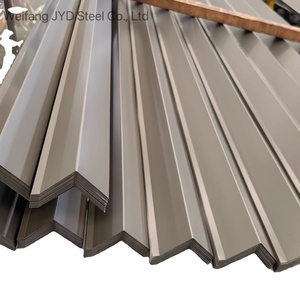
Heavy-gauge precision-brake drip edge trims, eaves corners, and slab edge forms for clean concrete containment.
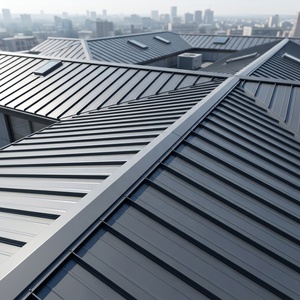
Double-lock mechanical seamed structural panels suited for long purlin spans and extreme coastal uplift forces.
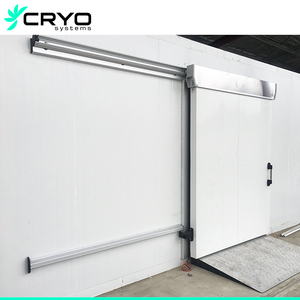
Hermetic thermal break sliding door system with continuous PU/PIR core for controlled atmosphere chillers and freezers.
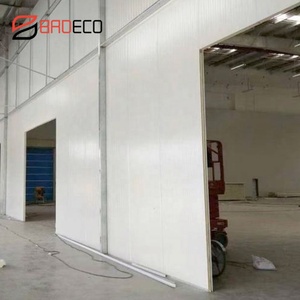
High-precision tongue-and-groove joint panels with cam-lock options for zero vapor transmission inside commercial cold vaults.
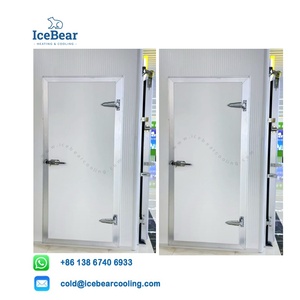
Reinforced marine-grade aluminum frame and anti-freeze heated gasket assemblies designed for intensive refrigerated handling.
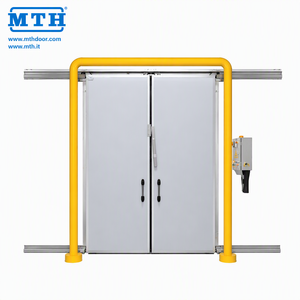
Patented downward-sliding rail mechanism for instantaneous airtight sealing under high differential thermal pressure.
In contemporary multi-story structural design, composite steel decking serves a dual structural function that radically streamlines high-rise and industrial building erection. During the initial pouring phase, the roll-formed profile acts as continuous formwork capable of supporting wet concrete, construction live loads, and auxiliary reinforcement over wide unpropped spans. Once the concrete cures and reaches its 28-day design strength ($f'c$), the steel profile and the reinforced concrete mass interact as a monolithic composite slab through mechanical interlocking, chemical bond adhesion, and shear friction along the fluted interfaces.
The shear transfer mechanism across the steel-concrete interface relies on precision-formed embossments stamped into the profile webs and top flanges during continuous roll-forming. In non-composite formwork decks, smooth profiles exhibit negligible horizontal bond, requiring independent structural bottom rebar. In contrast, our custom OEM profiles incorporate patented chevron-shaped and multi-directional dimpled indentations. These embossments generate mechanical micro-interlocking forces that counteract longitudinal slippage between the hardened slab and the steel skin under ultimate bending moments, satisfying the rigorous partial-shear connection criteria outlined in Eurocode 4 (EN 1994-1-1) and ANSI/SDI C-2017.
Selecting the ideal profile depth—ranging from 51 mm (2-inch nominal) to 76 mm (3-inch nominal) trapezoidal configurations—dictates the volume of concrete required, the structural slab dead load, and the fire resistance duration. Dovetail and re-entrant decking ribs offer optimized acoustic damping and facilitate the suspension of mechanical, electrical, and plumbing (MEP) systems without drilling or field-anchoring into the cured concrete slab.
Structural composite deck panels manufactured for OEM export are cold-formed from structural-quality carbon steel sheets meeting ASTM A653 / A653M, ASTM A1063, or EN 10346 specifications. Core yield strengths are calibrated between Grade 33 (230 MPa) and high-yield Grade 80 (550 MPa). For installations subjected to high structural live loads—such as automated logistics distribution warehouses, data centers with extreme server cabinet point loads, and heavy manufacturing floors—the application of high-yield steel (S350GD, S450GD, or S550GD) minimizes baseline material thickness down to 0.75 mm – 1.20 mm while delivering superior unpropped span performance.
Our automated profiling mills can modify cover widths (from 600 mm up to 1025 mm), fluting pitches, and embossing densities to match exact regional design codes including BS 5950 Part 4, AS/NZS 2327, and SDI standards.
Located in strategic port hubs with continuous supply of first-tier coil masters. We ensure containerized cut-to-length packages can be dispatched within 7–14 operational days from engineering sign-off.
Comprehensive technical comparison across primary cold-formed profile geometries utilized in commercial, logistics, and infrastructure construction.
| Profile Designation | Rib Height | Standard Gauge (mm) | Max Unpropped Span | Fire Rating (Without Bars) | Optimal Field Application |
|---|---|---|---|---|---|
| OEM-CD 51 Trapezoidal | 51 mm (2.0") | 0.75 – 1.20 mm | 2.80 m – 3.40 m | 1.5 to 2.0 Hours | Commercial office towers, multi-tier residential slabs |
| OEM-CD 76 Deep Rib | 76 mm (3.0") | 0.80 – 1.50 mm | 3.60 m – 4.80 m | 2.0 to 3.0 Hours | Heavy industrial plants, data center mezzanines |
| OEM-RE 50 Dovetail | 50 mm (1.97") | 0.90 – 1.20 mm | 2.50 m – 3.10 m | 1.5 to 2.0 Hours | Acoustic-critical hospital buildings, high-end cleanrooms |
| OEM-LS 150 Long Span | 150 mm (5.9") | 1.00 – 1.60 mm | 5.50 m – 7.20 m | 2.0 to 4.0 Hours | Sports stadiums, airport terminals, heavy-load transfer bays |
*Note: Unpropped spans assume normal-weight concrete ($2400 \text{ kg/m}^3$) with single-span conditions calculated in compliance with SDI C-2017. Specific engineering calculation submittals provided per project.
Strategic structural shifts and material engineering trends driving global contractor decisions over the next decade.
Contractors increasingly specify S450GD and S550GD steel substrates. By leveraging high yield capacity, sheet thickness can be reduced by 15-20% without sacrificing slab moment capacity, saving thousands of metric tons in global shipping costs.
Replacing standard Z275 hot-dip galvanizing with Zinc-Aluminum-Magnesium (ZAM / ZM310) ternary alloys. ZAM delivers 3-5 times higher salt-spray corrosion resistance, critical for coastal LNG terminals, marine ports, and high-salinity Gulf climates.
Tier-1 contractors demand cut-to-length decking bundled specifically according to erection sequencing. Digital roll-former CNC controllers interface directly with Tekla/Revit models, eliminating all job-site cutting, scrap metal, and field re-shaping.
With CBAM (Carbon Border Adjustment Mechanism) implemented across Europe and green certifications (LEED v4.1, BREEAM) required globally, buyers mandate verified Environmental Product Declarations (EPD) with certified low embodied carbon (scrap EAF pathways).
How state-of-the-art continuous roll-forming engineering achieves micron-level profile consistency and high-integrity mechanical bond.
Extreme high-yield steel (up to 550 MPa) experiences significant spring-back. Our production lines utilize up to 36 progressive forming roller stands with computerized roll-flower design. This prevents residual micro-cracking at rib corners and guarantees pitch tolerances within ±1.5 mm across a 12-meter span.
Embossment depth is synchronized dynamically via servo-driven embossing dies. Even depths of 2.0 mm to 3.5 mm are formed without tearing the galvanized zinc layer, ensuring optimal shear transfer coefficients without creating corrosion pathways.
High-speed cutting cycles utilize closed-die profile blades matching the exact cross-section of the ribbed decking. This ensures cleanly cut, burr-free ends that butt tightly over structural support beams without flaring, speeding up field welding and stud installation.
Combining heavy manufacturing capacity, rigorous documented testing, and end-to-end multi-market logistics coordination.
Multiple continuous cold-rolling lines operating concurrently delivering up to 10,000 square meters of decking and secondary steel daily, preventing site schedule disruption.
Materials engineered for high heat, 90%+ marine humidity, and intense thermal expansion. Ideal for GCC desert environments, tropical Southeast Asia, and harsh mining sites.
Every heat lot undergoes mechanical tensile validation, zinc coating mass spectrometer analysis, and shear bond capacity testing for seamless consultant submittal approvals.
Comprehensive ocean and overland multimodal freight network with local representations across Oman, UAE, Saudi Arabia, Qatar, and export lanes into Africa and Europe.
In-depth responses to the structural, metallurgical, and commercial questions frequently evaluated by consultants, lead contractors, and procurement heads.
The necessity of temporary propping depends on the ratio between the clear beam span and the decking profile's section modulus ($Z_x$) and moment of inertia ($I_x$) in the positive and negative bending planes. In unpropped installations, the bare steel decking profile alone must resist the entire dead weight of the wet concrete, the weight of the profile, and dynamic construction live loads (typically 1.0 to 1.5 kPa per SDI standards) without exceeding allowable bending stress ($0.6 \times F_y$) or a deflection limit (typically $L/180$ or 20 mm). If spans exceed the unpropped limit (e.g., beyond 3.2 meters for standard 51 mm profile at 0.9 mm thickness), temporary falsework propping is required at mid-span or third-points until the concrete achieves 75% of its 28-day compressive cylinder strength.
Longitudinal shear capacity between steel decking and concrete is determined experimentally through full-scale bending tests using either the semi-empirical $m-k$ method (BS 5950 Part 4 / Eurocode 4) or the partial shear connection (PSC) method. Embossments act as miniature mechanical shear connectors. Deeper, sharply defined embossments with inclined bearing faces provide higher shear bond coefficients ($m$) and intercept mechanical slipping lines. Without engineered embossments, smooth steel possesses minimal chemical bond with concrete, which breaks abruptly under moderate cyclic or fatigue loading, reducing composite slab efficiency to bare steel formwork mode.
Standard dry interior air-conditioned offices typically perform reliably with Z180 or Z275 (G60 / G90, representing 275 g/m² total dual-sided zinc mass). However, for coastal zones, industrial chemical facilities, open-air car parks, or humid Gulf environments, Z275 provides insufficient sacrificial protection against chloride attack. We strongly specify Z350, Z450, or modern Zinc-Aluminum-Magnesium alloys (such as ZM310). ZAM forms a protective simonkolleite barrier that heals scratched sheared edges and delivers up to 4 times longer protection before onset of base steel oxidation.
Wet storage stain occurs when closely packed, nested galvanized profiles are exposed to standing water, condensation, or high humidity devoid of circulating air. Without oxygen and carbon dioxide, the zinc cannot convert to its resilient zinc carbonate passive skin; instead, it rapidly oxidizes into zinc hydroxide. To ensure 100% rust-free delivery across ocean transits, our factory applies an in-line passivating chemical rinse (trivalent chromium or Cr-free polymer sealant), nests bundles with protective plastic separators, encases loads in heavy-duty volatile corrosion inhibitor (VCI) shrink wrap, and equips shipping containers with continuous desiccant breathers.
Head shear connectors (typically 19 mm diameter welded through the troughs of the decking into the top flange of structural I-beams) perform two interdependent roles: First, they transfer horizontal longitudinal shear forces between the structural steel beam and the concrete slab, converting independent beam-plus-slab systems into highly efficient composite T-beam configurations. This reduces overall beam structural steel tonnage by up to 30-40%. Second, they lock the deck plates to the frame, resisting diaphragm torsion and preventing wind-induced uplift during concrete casting.
During a building fire, the exposed bottom steel deck profile absorbs intense heat, loses its yield strength above 500 °C, and ceases to function as primary tensile reinforcement. To maintain slab structural integrity and fire compartment insulation (satisfying standard ASTM E119 / EN 1365-2 curves), fire mesh reinforcement (such as standard BRC welded wire fabric) or bottom rib rebar must be engineered into the troughs. However, for 60 to 90-minute fire ratings, modern deep-profile designs with adequate slab concrete cover over the rib crest (typically 70 mm to 100 mm minimum) frequently achieve certification relying solely on top anti-crack mesh.
Traditional domestic distributors maintain fixed standard stock lengths (e.g., 6.0 m, 9.0 m, or 12.0 m), forcing contractors to execute extensive field cutting, which wastes up to 8% to 12% in raw scrap and expends labor. As a direct OEM factory, we ingest the structural framing model and cut profiles to exact millimetric tolerances (e.g., 7,425 mm) with computerized flying shears. Slabs are packed and color-tagged by building sector, floor level, and bay designation, enabling the crane to hoist bundles straight to their permanent erection zones without re-handling.
Every export shipment includes a verified Quality Dossier containing: (1) Certified Mill Test Certificates (MTC) 3.1 with chemical analysis and mechanical pull tests; (2) In-line profile dimension inspection reports verified by laser micrometer; (3) Coating thickness and mass gauge verifications; (4) Third-party test reports validating shear connector weldability through galvanized sheets in compliance with AWS D1.1; and (5) Detailed container packing lists with bundle piece counts and center-of-gravity lift diagrams.
Whether you require mill-direct containerized export of standard trapezoidal decking, custom-embossed high-yield profiles, or complete integrated building envelopes including cold-rolled purlins and insulated sandwich panels, our engineering team provides complete structural calculations, BIM layout optimization, and competitive factory quotations within 24 hours.
Our sales engineers respond to project questions during working hours (GST+4).