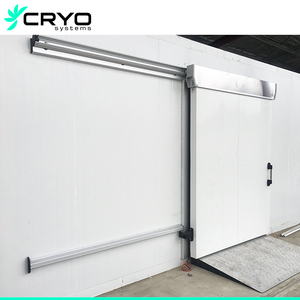
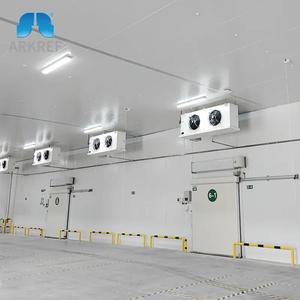
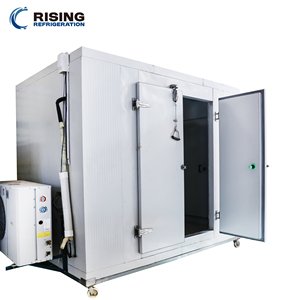
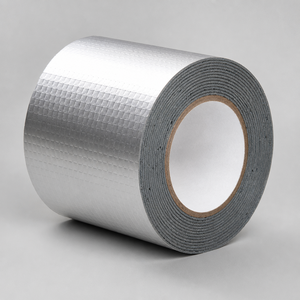
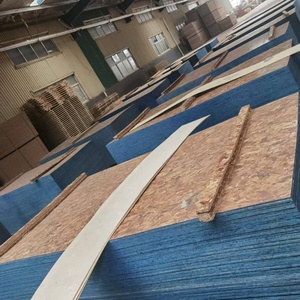
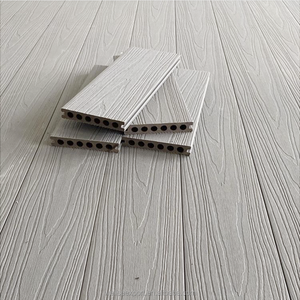
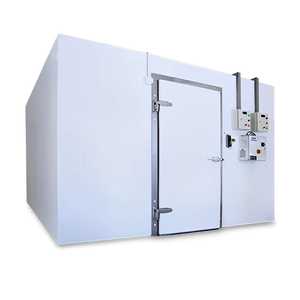
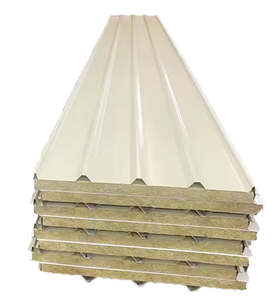
In modern industrial design, C purlins interact directly with roof sheets, wall sandwich panels, composite floor decks, and thermal air barriers. Below are factory-integrated building envelope solutions manufactured to exact project tolerances.
Cold-formed galvanized steel C purlins (commonly termed C-sections or lipped channels) represent the critical secondary framing backbone of modern Pre-Engineered Buildings (PEB), logistical fulfillment warehouses, agro-industrial complexes, and large-scale utility solar arrays. Functioning primarily as horizontal flexural structural members supporting roof decking, wall cladding panels, and dynamic environmental loads, C purlins transfer live, dead, collateral, snow, and wind-uplift pressures directly to the primary steel portal frames.
Unlike traditional hot-rolled channel sections (such as UPN or PFC beams), modern cold-formed C purlins are manufactured via continuous high-speed roll forming from high-tensile structural coil. By cold-working steel strip through multiple progressive roller passes, manufacturers achieve exceptional strength-to-weight ratios, reducing the overall dead load of the superstructure by up to 45% compared to hot-rolled alternatives. This structural efficiency translates directly into lower foundation volumes, streamlined crane lifts, and substantial freight economies when transporting components across international borders.
However, the performance of cold-formed C-sections is governed by sophisticated structural phenomena, specifically local buckling, distortional buckling, and lateral-torsional buckling. Because the section consists of thin plates (typically 1.20 mm to 3.20 mm thick) comprising an unlipped web, two flanges, and two stiffening lip returns, the procurement engineer cannot merely evaluate cost-per-ton. One must critically audit the manufacturer's roll-tooling calibration, corner bend radius tolerances, web flat depth, and the chemical consistency of the substrate coil. A variation of merely 0.1 mm in base metal thickness or an inaccurate flange return angle can reduce moment capacity by more than 14%, precipitating progressive structural failure under peak hurricane wind gusts or seismic cyclic loading.
A benchmark evaluation of the world's premier roll-forming mills, assessed across steel tensile consistency, zinc coating adhesion, roll-forming speed, containerized export packaging, and international structural code compliance (ASTM, EN, AS/NZS, JIS).
A quick-reference side-by-side evaluation designed for EPC procurement directors, comparing technical boundaries, material options, and strategic export advantages.
| Manufacturer | Base Location | Yield Strength Range | Max Zinc / Alloy Coating | Gauge Scope | Primary Export Corridor | Structural Advantage |
|---|---|---|---|---|---|---|
| Emaar Industries | Muscat, Oman | S350GD – S450GD | Z275 / Zn-Al-Mg 310 | 1.50 – 3.20 mm | GCC, East/West Africa | Envelope Integration & C5 Durability |
| Nucor Sections | North Carolina, USA | Grade 50 / 55 ksi | G90 / G115 (ASTM) | 1.20 – 3.00 mm | Americas / Canada | Low-Carbon EAF Recycled Content |
| Voestalpine Metsec | Oldbury, UK | S450GD High Tensile | Z275 (EN 10346) | 1.20 – 3.20 mm | Europe, Scandinavia | Proprietary BIM Optimization Engine |
| Tata Steel Systems | Netherlands / UK | S390GD – S450GD | Galvalloy® (Zn-Al 95/5) | 1.30 – 3.00 mm | Europe, Africa | Superior Cut-Edge Protection |
| Baosteel Roll-Forming | Shanghai, China | Q235B – Q460 | Z80 – Z600 g/m² | 1.20 – 3.50 mm | Global Belt & Road | Massive Capacity & Mega-Tonnage |
| BlueScope Lysaght | Melbourne, Australia | G450 / G550 MPa | Z350 – Z450 (GALVASPAN) | 1.00 – 3.00 mm | Oceania, ASEAN | Tested for Severe Cyclonic Zones |
| Severstal Processing | Cherepovets, Russia | 320 – 390 MPa | 275 – 450 g/m² | 1.50 – 3.50 mm | Eurasian Union | Extreme Sub-Zero Impact Toughness |
| JSW Steel Coated | Mumbai, India | 250 – 350 MPa | Z120 – Z275 g/m² | 1.20 – 3.20 mm | Middle East, Africa | Competitive Pricing & High Volume |
| Hoa Sen Group | Binh Duong, Vietnam | G350 – G450 MPa | Z100 – Z300 g/m² | 1.20 – 3.00 mm | USA, Australia, ASEAN | Zero-Spangle Skin-Passed Surface |
| Zeman Bauelemente | Vienna, Austria | S390GD – S450GD | Z275 / Zn-Al-Mg | 1.50 – 3.00 mm | European Union | Micro-Tolerance Precision Slotted Holes |
A primary failure mode in structural steel procurement is the mismatch between nominal yield strength and effective section modulus under cold-forming strain hardening. In cold-formed C purlins, the corner zones experience profound plastic deformation, inducing local yield spikes while slightly compromising elongation ductility. Leading roll-forming factories precisely calibrate the inner bend radius ($r_i$) to avoid micro-fissuring of the protective zinc barrier.
While traditional hot-dip galvanizing (HDG) to ASTM A653 (e.g., G90 / Z275 coating providing 275 g/m² total weight on both sides) has served as the historical industry standard, advanced industrial facilities in coastal, saline, or chemical environments are shifting to Zinc-Aluminum-Magnesium (ZAM / ZM) alloys (such as ZM250 / ZM310 according to EN 10346). The inclusion of 1.5% to 3.0% Magnesium and Aluminum forms a dense, insoluble simonkolleite patina that dramatically restricts electrochemical chloride penetration.
Crucially, Zn-Al-Mg alloys exhibit active autogenous cut-edge healing. When C-sections are punched with slotted bolt holes or sheared to length on high-speed fly-cutters, the exposed base-metal steel edge is vulnerable to galvanic oxidation. In traditional Z275 coatings, red rust appears at cut edges within 6 to 12 months in coastal C4 zones. With Zn-Al-Mg alloys, magnesium ions migrate across the exposed sheared edge, precipitating a protective basic zinc-hydroxy-salt barrier that arrests creep corrosion, extending design life up to 4 times longer with reduced coating mass.
Specifying ultra-high strength steel (such as G550 or S550GD with 550 MPa minimum yield) permits the engineer to select a thinner nominal gauge, decreasing purlin tonnage by up to 22%. However, structural engineers must exercise vigilance regarding serviceability limit states (deflection). Because the modulus of elasticity of steel ($E = 205,000 \text{ MPa}$) remains fundamentally invariant regardless of yield strength, reducing the section thickness diminishes the moment of inertia ($I_x$). Under standard roof live loads ($0.60 \text{ to } 0.75 \text{ kN/m²}$) or solar panel ballast, a high-strength thin purlin may easily satisfy bending stress limits yet fail the allowable deflection threshold (typically $L/180$ to $L/240$). For typical industrial spans of 6.0 m to 8.5 m, S350GD (350 MPa yield) provides the optimal equilibrium between moment carrying capacity, web-crippling resistance, and flexural deflection control.
On-site drilling of cold-formed purlins violates structural warranties and initiates rapid localized corrosion. Tier-1 manufacturers utilize fully synchronized inline hydraulic or servo-electric punching units operating under closed-loop CNC control. Typical industry slot geometries utilize $18 \times 22 \text{ mm}$ or $14 \times 20 \text{ mm}$ elongated slots to accommodate thermal expansion cycles in long-span buildings. Web-cleat bolt holes must maintain an edge distance ($e_1$) of not less than $1.5 \times d_0$ (hole diameter) to safeguard against premature shear tear-out under seismic base shear or suction gusts.
How decarbonization, artificial intelligence roll-forming control, solar-ready profiles, and international trade mechanisms are reshaping secondary structural steel procurement.
The European Union's Carbon Border Adjustment Mechanism (CBAM) and corporate Scope 3 decarbonization targets now require steel mills to supply Environmental Product Declarations (EPDs). Mills transitioning from blast furnaces to green hydrogen Direct Reduced Iron (DRI) and EAF melting with verified CO² intensity below 0.6t CO²/t steel are securing substantial procurement premiums.
With industrial rooftop solar PV installations exploding globally, C purlins are increasingly subjected to augmented combined stresses (deadweight of modules + localized micro-vortex wind suction). Modern factories are engineering asymmetric flange returns and pre-slotted top flanges that interface directly with rooftop solar clamping rails, slashing on-site installation hours by 35%.
The era of manual shop-drawing redrafts is over. Automated fabricators utilize direct API pipelines transmitting Tekla Structures or Autodesk Revit IFC files directly into the roll-forming machine PLC. Every C-section is sheared to exact millimeter lengths, punched with custom bolt arrays, and inkjet-labeled with building grid coordinates, drastically minimizing site staging bottlenecks.
Critical answers to questions routinely faced by procurement managers, structural consultants, and quality auditors during mill inspection and material handovers.
C purlins possess asymmetric channel cross-sections best suited for simple, single-span secondary framing, end-wall framing, and door/window trimmers. Z purlins have inverted flanges that allow them to overlap at interior portal frame rafters, forming continuous, structurally indeterminate multi-span beams that lower peak mid-span bending moments by up to 30%.
Under ASTM A924 and EN 10143, base metal thickness (BMT) excludes the zinc coating layer. A purlin ordered as 2.00 mm total coated thickness (TCT) with a Z275 coating typically has a BMT of only ~1.96 mm. Structural calculation packages require BMT for section property determination. Purchasing departments must ensure supplier mill test certificates clearly certify minimum BMT compliance.
White rust (wet storage stain) forms when zinc-coated purlins are tightly bundled without air circulation in humid ship holds, converting metallic zinc into voluminous zinc hydroxide. Exporters prevent this through chemical passivation (Cr3+ or Cr-free zirconium formulations), thin electrostatic protective vanishing oils, inclusion of VCI vapor-corrosion-inhibitor paper, and strict wood-dunnage bundle strapping.
According to EN 1090-2 and AISI S100 standards, longitudinal camber (vertical deviation from straightness) and bow (horizontal web deviation) must not exceed $L/500$ or a maximum of 10 mm. Twist of the cross-section along the longitudinal axis should not exceed 1 degree per meter. Reputable mills install progressive computer-controlled anti-twist turks-head straightening units at the roll-former exit.
Lipped flanges (returns bent inward at 90 degrees, typically 15 mm to 25 mm deep) provide essential edge stiffening to the flange plates. Without a lip return, the unlipped flange undergoes rapid local compressive buckling at minor bending stress. Lipped channels are mandatory for all flexural roof and wall framing spans exceeding 3.0 meters.
Field welding of thin-gauge galvanized purlins is strongly discouraged. Intense electric-arc welding temperatures vaporize the zinc coating (generating hazardous zinc oxide fumes) and compromise structural ductility in heat-affected zones (HAZ). If field welding is unavoidable, the zinc must be ground clean, full penetration ensured, and the weld zone treated with a 95% zinc-rich cold galvanizing compound compliant with ISO 12944.
Standard 40-foot High-Cube (40' HC) shipping containers have an internal length limit of 11.85 meters and a payload limit of ~26.5 metric tons. Purlins ordered for containerized export should ideally be detailed at lengths under 11.80 meters to permit forklift clearance, or arranged for break-bulk charter vessels if building frame spans demand single-piece 14-meter purlins.
ASTM A653 Structural Steel Grade 50 Class 1 ($F_y \ge 345 \text{ MPa}$) equates closely to European standard EN 10346 Grade S350GD ($F_y \ge 350 \text{ MPa}$) and Australian standard AS 1397 Grade G350. Grade 80 ($F_y \ge 550 \text{ MPa}$) corresponds directly with AS 1397 G550 and EN 10346 S550GD.
Due to the shear center of a C-section lying outside its web, transverse downward gravity loads induce coupled torsion and bi-axial bending. Installing threaded sag rods or cold-formed anti-sag struts at mid-span or third-points restrains lateral displacement and rotational twist, permitting engineers to exploit 100% of the section's major-axis flexural resistance.
Procurement teams must demand an EN 10204 Type 3.1 inspection certificate per master heat batch. Key audited variables include actual heat yield and tensile strength, elongation percentage, chemical analysis (Carbon, Silicon, Manganese, Phosphorus, Sulfur), bend test results, and triple-spot zinc coating mass verification.
Operating modern continuous panel and cold-forming production lines in Muscat, Oman, Emaar Industries delivers an unprecedented procurement advantage for steel builders across the Middle East, East Africa, and global marine corridors.
Submit your framing layout, wind uplift criteria, and purlin span schedules for a complete structural optimization check and factory pricing estimate.
Get CatalogOur sales engineers respond to project questions during working hours (GST+4).