
Engineered in high-capacity continuous double-belt laminating lines. Every panel combines high-density basalt stone wool with pre-painted galvanized or Alu-Zinc steel facings, offering certified A1 fire resistance, exceptional acoustic dampening, and permanent structural rigidity.
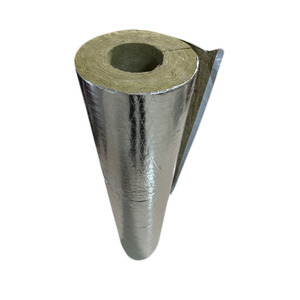
Precision-fabricated basalt insulation blocks engineered for pipe supports, heat trace wraps, and thermal vessel jackets. Hydrophobic silicone oil emulsion ensures non-hygroscopic long-term reliability.
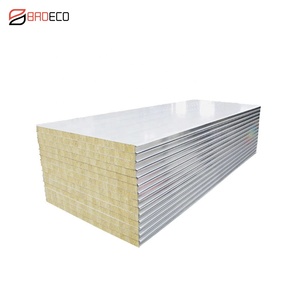
Architectural external cladding and internal fire barrier panels with secret-fix tongue-and-groove joints. Prevents thermal bridging while maintaining integrity under ASTM E119 fire conditions.
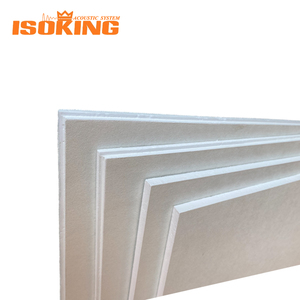
Specialized micro-perforated acoustic panels and suspended ceiling baffles engineered for generator enclosures, mechanical plant rooms, recording spaces, and industrial noise containment zones.
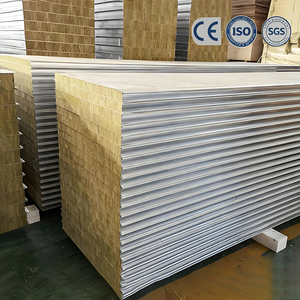
High-load vertical and horizontal wall paneling formulated for chemical plants, battery mega-factories, and logistics warehouses demanding NFPA 285 full-assembly fire containment qualification.
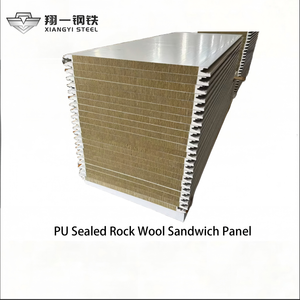
Dual-purpose thermal and sound insulating composite panel featuring labyrinth-profile sealing ribs. Best suited for high-temperature cold chain processing halls and food-grade industrial facilities.
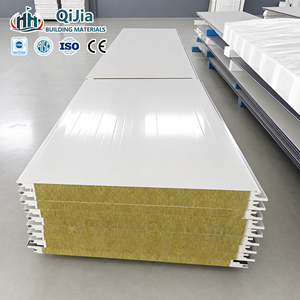
High-tensile corrugated outer profile designed for low-pitch roofs with heavy snow, solar panel arrays, and high wind-uplift loads. Features integrated capillary break overlap joints.
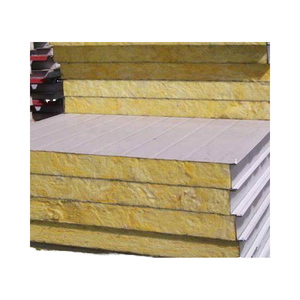
Factory-prefabricated structural insulated building envelope system. Delivered pre-cut to custom drawings to slash on-site steel erection labor and crane time by up to 45%.
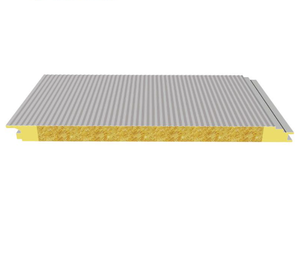
Multi-purpose architectural sandwich panel configured with flat, micro-rib, or deep corrugated skins. Provides complete fire protection without the toxicity risks associated with foam plastic insulation.
Across modern architectural and industrial construction, building envelopes must satisfy increasingly demanding performance parameters: non-negotiable Euroclass A1 reaction to fire, predictable thermal resistance ($\lambda \le 0.038\text{ W/m}\cdot\text{K}$), environmental durability under high coastal UV or chemical vapor exposure, and acoustic sound reduction targets upwards of $Rw = 32\text{ dB}$. Historically, specifiers relied almost exclusively on European panel manufacturers. Over the last decade, however, top-tier Chinese manufacturers have shifted the competitive paradigm through multi-million-dollar investments in continuous double-track caterpillar laminating technology, automated raw-material blending, and certified compliance with ASTM E84, EN 14509, and ISO 9001 standards.
As international EPC contractors balance structural life-cycle cost with aggressive project delivery timetables, sourcing mineral wool panels directly from leading Chinese exporters provides significant advantages in scalable output and raw material security. Chinese producers have direct access to abundant volcanic basalt deposits, which are melted in high-temperature cupola furnaces at $1,450^\circ\text{C}$ to produce inorganic stone wool fibers with low shot content ($<3\%$) and high fiber fineness (4 to 7 microns). When oriented vertically into perpendicular lamella strips with high-pressure polyurethane structural bonding, these mineral wool panels achieve perpendicular tensile adhesive strengths exceeding $0.10\text{ MPa}$ and compressive strengths above $0.12\text{ MPa}$, rivaling European production while offering significant cost efficiency.
| Insulation Core Type | Core Density (kg/m³) | Reaction to Fire (EN 13501-1) | Thermal Cond. (W/m·K) | Sound Attenuation (Rw) | Max Service Temp. |
|---|---|---|---|---|---|
| Basalt Mineral Stone Wool | 100 – 140 kg/m³ | Euroclass A1 / A2-s1,d0 | 0.036 – 0.040 | 32 – 48 dB (High) | Up to 1,000°C |
| Polyisocyanurate (PIR) | 38 – 45 kg/m³ | Euroclass B-s1,d0 | 0.020 – 0.023 | 24 – 26 dB (Low) | Up to 120°C |
| Polyurethane (PUR) | 36 – 40 kg/m³ | Euroclass B-s2,d0 / B3 | 0.022 – 0.026 | 23 – 25 dB (Low) | Up to 100°C |
| Expanded Polystyrene (EPS) | 16 – 22 kg/m³ | Euroclass E / Combustible | 0.038 – 0.042 | 22 – 24 dB (Low) | Up to 75°C |
| Glass Fiber Wool | 48 – 64 kg/m³ | Euroclass A1 / Non-combustible | 0.035 – 0.039 | 28 – 34 dB (Medium) | Up to 350°C |
The strategic choice between organic foam (PIR/PUR) and inorganic stone wool is dictated by life-safety building codes. While PIR achieves superior thermal resistance per millimeter of thickness, it degrades into toxic smoke under intense flashovers. Mineral wool sandwich panels produce zero toxic smoke and zero burning droplets (s1, d0). For multi-story commercial towers, cold logistics distribution centers storing flammable pallets, lithium-ion battery cleanrooms, and oil refinery process plants, Chinese mineral wool sandwich panels represent the only structural envelope solution capable of satisfying insurance underwriters (such as FM Global standards) and municipal Civil Defense fire codes.
How regulatory shifts, embodied carbon mandates, and prefabrication requirements are transforming the specification and export of Chinese mineral wool sandwich panels.
Environmental Product Declarations (EPDs) and LEED v4.1 certification are driving procurement away from legacy phenol-formaldehyde adhesives. Top Chinese exporters are adopting plant-based starch binders and thermosetting bio-resins that eliminate volatile organic compounds (VOCs) and ensure fiber bio-solubility in human lung tissue conforming to EU Directive Note Q standards.
To combat the traditional weakness of stone wool panels—vulnerability to water ingress along joint interlocks—the industry is migrating to hybrid continuous manufacturing. In this process, the longitudinal edges are injected with high-density closed-cell PIR foam while the primary core remains non-combustible stone wool, delivering both fire resistance and airtight vapour sealing.
With fast-track construction schedules, general contractors no longer accept on-site cutting of composite panels. Advanced Chinese suppliers are integrating architectural building information modeling (BIM) files directly into CNC saw stations, producing numbered panels up to 16.5 meters long with pre-drilled fasteners and customized service penetrations, cutting site installation time by 30%.
Procurement in the GCC, Southeast Asia, and mining corridors requires high resistance to UV radiation, sandstorms, and marine salinity. Panels are increasingly specified with 50-micron PVDF (polyvinylidene fluoride) or Polyurethane (PUR-PA) architectural coatings, achieving ISO 12944 C4/C5 atmospheric corrosivity compliance and providing 25-year gloss retention warranties.
Ocean freight rates dictate landed cost competitiveness. Chinese exporters have upgraded from simple manual strapping to automated, robot-assisted palletizing lines that bundle panels inside heavy polyethylene film under partial vacuum, protecting tongue-and-groove profiles from denting during multimodal transit while maximizing 40-foot HQ container fill rates up to 98%.
Operating dedicated high-precision continuous lines capable of delivering 10,000 square meters daily. Built to withstand extreme environmental challenges from Middle Eastern deserts to sub-zero industrial zones.
Our dual-track 42-meter caterpillar lamination line ensures uniform temperature, pressure, and curing time for stone wool adhesive lamination, eliminating delamination issues common with batch-press production.
From petrochemical fire partitions in Oman and Saudi Arabia to refrigerated food distribution facilities in Southeast Asia and Europe, our engineering team has proven project delivery experience worldwide.
Full-lot traceability from virgin basalt raw materials to finished panels. Every shipment includes certified mill test reports, density verification, and third-party fire test reports for consultant submittals.
Cold-rolled structural steel skins manufactured from high-yield galvanized (Z275) or Galvalume (AZ150) substrates. Available in concealed-fastener flat, micro-wave, and 5-rib load-bearing roof profiles.
Direct answers to the questions façade engineers, cost consultants, and structural steel fabricators evaluate before issuing purchase orders.
Continuous automated production lines cut and rotate high-density stone wool boards 90 degrees into vertical lamellas, uniformly applying adhesive across the entire facing before feeding into a 30-meter heated caterpillar press. This ensures consistent shear bond strength (>0.10 MPa) and uniform density throughout the panel. Hand-made or batch panels frequently suffer from hollow adhesive pockets, uneven density, and core delamination under thermal expansion stresses.
Natural basalt mineral fibers have a melting point exceeding 1,000°C. In full-scale fire endurance testing under EN 1364-1 and ASTM E119, panels with core densities of 120 kg/m³ and thicknesses of 150mm to 200mm withstand furnace heat without melting, falling, or producing burn-through openings, maintaining thermal insulation and structural partition integrity for up to 240 minutes.
Raw mineral wool fibers are treated with reactive organosilicon hydrophobic emulsion during fiber spinning, delivering water repellency exceeding 98%. For humid external environments, we specify our hybrid edge-sealed profile, which encapsulates the longitudinal joint with polyurethane (PIR) foam and EPDM continuous compression gaskets, blocking capillary water ingress and vapor drive.
We recommend a minimum 0.50mm outer steel skin and 0.40mm inner steel skin for non-load-bearing internal partitions. For exterior industrial applications, a 0.60mm outer skin paired with 0.50mm inner skin is standard. For coastal or chemically aggressive environments, we utilize hot-dip galvanized Z275 or Aluzinc AZ150 steel coated with a 25-micron High Durability Polyester (HDP) or 50-micron PVDF resin paint system.
Standard unperforated mineral wool panels typically achieve sound reduction indices of Rw = 30 to 34 dB. Where plant rooms or industrial acoustic enclosures require higher dampening, our micro-perforated inner face series with integrated glass-veil sound scrim achieves Rw ratings between 38 dB and 48 dB, effectively absorbing high-energy low-frequency industrial machinery noise.
Allowable spans depend on panel thickness, steel facing profile, and local design wind loads. For a standard 100mm wall panel subjected to a 1.0 kN/m² wind load, safe purlin spacing spans between 3.0 and 4.2 meters under single-span conditions. For multi-span continuous configurations with 0.6mm steel skins, spans can extend up to 5.0 to 6.0 meters while maintaining deflection limits below L/200.
Panels are interleaved with protective polyethylene film on pre-painted faces, bundled on heavy-duty EPS or timber skids, wrapped with multiple layers of industrial waterproof stretch film, and reinforced with corner angle protectors. Pallets are engineered to container-interior dimensions (2.35m width), allowing side-by-side crane or extended forklift handling with zero risk of edge crush.
With our automated continuous line capacity of 10,000 square meters per day, raw panel production for a 20,000 m² project typically takes 3 to 5 operating days following steel coil uncoiling and quality verification. Total manufacturing lead time from approved shop drawings and color selection to port container loading is typically 14 to 21 business days.
Yes. Both configurations are fully supported. For horizontal installations, we provide concealed-screw architectural joint details with recessed EPDM gaskets that create crisp shadow joints (10mm to 25mm) while shielding fasteners from driving rain. Structural column spacing and corner flashing trims are engineered to align with horizontal module heights.
We supply comprehensive project submittal packages containing raw steel mill test certificates (chemical analysis and yield strength), stone wool core density and water-repellency verification, ISO 9001/14001 factory audits, third-party fire test reports (EN 13501-1 / ASTM E84 / BS 476 Part 22), load-span structural calculation sheets, and customized BIM/AutoCAD details.
Whether you require project load-span calculations, third-party fire certificates, custom color samples, or a comprehensive CIF quotation for your upcoming industrial project, our technical engineering team is here to assist.
Our sales engineers respond to project questions during working hours (GST+4).