
Precision-manufactured on European continuous double-belt lines, our export assemblies integrate cyclopentane-blown rigid polyurethane cores, deep-corrugated structural skins, and vapor-barrier jointing for severe tropical deployments.
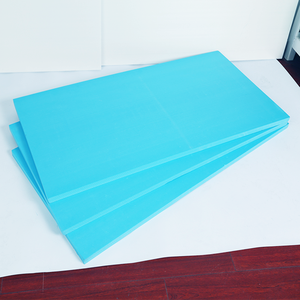
Heavy-load extruded polystyrene board engineered specifically to eliminate sub-slab thermal bridge heat infiltration and mitigate permafrost under-heave in extreme freezer foundations.
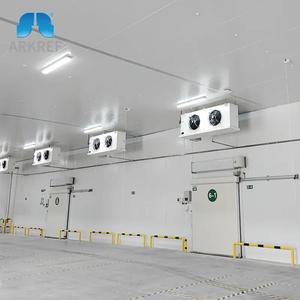
Ultra-thick high-density rigid polyurethane envelope equipped with heavy-duty eccentric cam-lock hooks and perimeter gaskets for deep seafood cryogenic chilling down to -45°C.
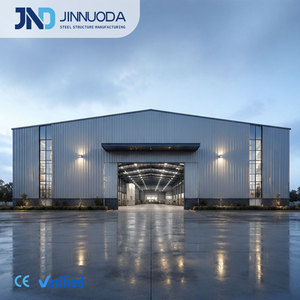
High-tensile cold-rolled C/Z galvanised steel structural framework providing rigid framing and dynamic wind-load support for high-span industrial insulated roofing configurations.
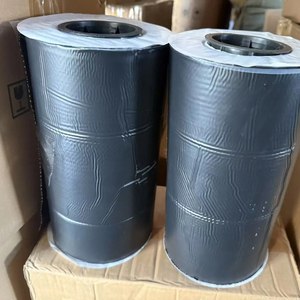
Elastomeric sealing tape designed to lock panel joints, ridge caps, and perimeter penetrations against intense monsoon downpours and thermal movement degradation.
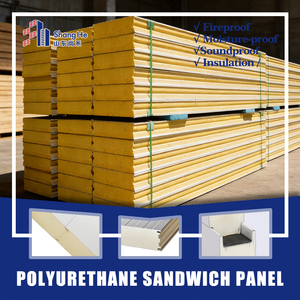
Continuous polyurethane foam panel featuring fire-retardant B1 PIR chemistry and food-grade antimicrobial skin coatings tailored for commercial cold storage distributions.
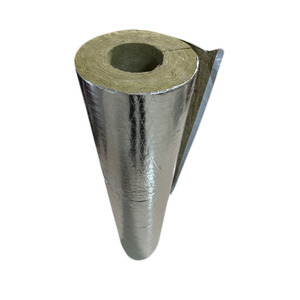
Basalt-fiber non-combustible structural panel providing 1 to 4 hours of certified fire resistance rating to comply with Vietnam's rigorous QCVN 06:2022 fire standards.
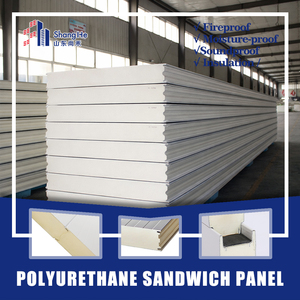
Trapezoidal high-rib self-supporting roof cladding with hidden overlapping screw connections, providing extreme structural bending capacity and watertight tropical drainage.
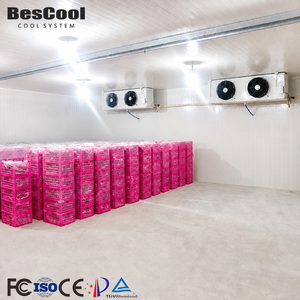
Integrated cold chain package including custom-molded corner panels, insulated slide doors, thermal break floor profiles, and secondary structural components for large logistics hubs.
Designing temperature-controlled environments, cleanrooms, and high-efficiency industrial manufacturing plants in Vietnam demands an engineering approach drastically different from temperate climates. Spanning the equatorial South (Ho Chi Minh City, Mekong Delta, Dong Nai) to the sub-tropical, typhoon-exposed North (Hanoi, Hai Phong, Bac Ninh), industrial building envelopes encounter continuous external relative humidity ranging between 80% and 98% alongside solar peak exterior metal surface temperatures exceeding 65°C.
Under these rigorous parameters, standard mechanical assembly methods suffer severe vapor drive pressure differentials ($\Delta P_v \ge 2.8 \text{ kPa}$). If the envelope lacks an unyielding closed-cell structure or features micro-porous perimeter gaps, moisture vapor relentlessly migrates into the core matrix. This migration induces irreversible core cell waterlogging, reduces thermal resistance ($R$-value degradation up to 40% in two operational seasons), and triggers interstitial steel delamination. As China's leading polyurethane insulation manufacturing exporter, our advanced continuous lines utilize high-index Polyisocyanurate (PIR) formulations and labyrinth-type tongue-and-groove jointing protected with integrated elastomeric butyl barriers, providing an impermeable building envelope that stabilizes operating chillers, prevents thermal bridging, and slashes total compressor electrical consumption.
Carefully aligning insulation cores with operational temperature thresholds, fire resistance codes under Vietnamese standards, and dead-load dynamics prevents over-specification while ensuring long-term life cycle integrity.
| Insulation Core Type | Thermal Conductivity (λ) | Closed-Cell Content | Fire Classification | Moisture Vapor Permeance | Recommended Vietnamese Use-Case |
|---|---|---|---|---|---|
| Continuous PIR (Polyisocyanurate) | 0.019 – 0.021 W/m·K | ≥ 96% | Class B1 / BS 476 Part 7 / FM 4880 | ≤ 1.5 ng/(Pa·s·m²) | High-Cube Logistics, Modern Food Processing, Pharma Cleanrooms |
| Discontinuous PUR (Polyurethane) | 0.022 – 0.024 W/m·K | ≥ 92% | Class B2 / B3 | ≤ 2.5 ng/(Pa·s·m²) | Modular Commercial Walk-in Coolers, Standard Chiller Rooms |
| Structural Rock Wool (Mineral) | 0.038 – 0.044 W/m·K | 0% (Fibrous Matrix) | Class A1 Non-Combustible (QCVN 06:2022) | Permeable (Vapor barrier critical) | Fire Separation Enclosures, Battery Mfg, High-Density Cleanrooms |
| Extruded Polystyrene (XPS) | 0.028 – 0.032 W/m·K | ≥ 98% | Class B1 / B2 Self-Extinguishing | ≤ 1.0 ng/(Pa·s·m²) | Sub-Slab Cold Room Flooring, Forklift Heavy Loading Foundation |
From aquaculture mega-freezers in the Mekong Delta to semiconductor cleanrooms in the Red River corridor, our export panels are customized to address distinct regional environmental challenges.
Seafood processing facilities operate at extreme temperature differentials where processing rooms (+12°C) interface with blast tunnel freezers (-40°C). High salinity and intense organic acids require our panels to feature 304/316L stainless steel or 55% Aluminum-Zinc alloy coated with anti-corrosive PVDF skins to eliminate rust pitting.
Global semiconductor, display, and EV battery assemblers require airtight, dust-free ISO Class 5 to Class 8 environments. Our flush-finish concealed joint PIR panels integrate seamlessly with HEPA ceiling grids and coved wall bases, resisting harsh chemical sanitizers while meeting stringent static-dissipative thresholds.
With Vietnam's booming e-commerce and grocery distribution, cold storage facilities are expanding vertically (clear heights > 25 meters). Our continuous production line supplies self-supporting tongue-and-groove roof and wall panels up to 15 meters in continuous single lengths, reducing horizontal laps and accelerating erection schedules.
Post-harvest storage for flowers, avocados, coffee, and fresh produce demands precision climate control with controlled levels of $O_2$ and $CO_2$. Our customized gas-tight panel joints sealed with chemical-resistant butyl compounds maintain hermetic conditions, curtailing ethylene accumulation and extending perishable crop shelf life.
Compliant with international WHO-GDP standards, pharmaceutical cold chain stores require unyielding backup reliability (+2°C to +8°C cold rooms, -20°C vaccine banks). Dual-gasket panel joins prevent heat leakage during power changeovers, keeping critical biomedical products within verified stability envelopes.
Coastal developments in North and Central Vietnam face annual seasonal typhoons generating wind uplifts over 2.4 kPa. Our high-rib trapezoidal insulated panels combine secondary Z-purlin anchor bolts with reinforced load-spreading saddle washers, creating a continuous diaphragm resisting catastrophic roof blow-offs.
Rapid foreign direct investment (FDI), nationwide cold chain capacity deficits, and strict regulatory overhauls are fundamentally reshaping how engineering firms source insulation envelopes.
Vietnam's Ministry of Construction (BXD) has dramatically tightened fire safety regulations through QCVN 06:2022/BXD and its updated amendments. Legacy EPS and non-flame-retardant PUR panels are no longer approved by fire police for commercial buildings, warehouses, or assembly facilities. Specifiers must integrate either Class B1 Polyisocyanurate (PIR) with proven low smoke-toxicity indices or non-combustible Rockwool cores for designated fire separation compartments. Sourcing from our factory guarantees tested composite panels with documented flame spread and fire resistance documentation ready for civil defense submittals.
Despite Vietnam's role as an agricultural and aquaculture exporting powerhouse, less than 20% of its total domestic perishables supply chain utilizes an uninterrupted cold line. Government master plans dictate adding millions of cubic meters of cold storage capacity across major logistic corridors through 2030. To meet urgent commissioning milestones, general contractors are replacing slow, cast-in-place concrete walls with pre-engineered steel frames combined with high-speed modular PIR sandwich wall and roof envelopes, reducing on-site erection schedules by up to 60%.
Procuring polyurethane panels from our Chinese manufacturing base allows Vietnamese importers and EPCs to leverage preferential trade provisions under the ASEAN-China Free Trade Area (ACFTA). By supplying authenticated Form E Certificates of Origin, the standard Most Favored Nation (MFN) import tariff of 10% to 15% on HS Codes 7308.90 and 3921.13 is reduced down to 0%. This significant fiscal margin directly offsets shipping container freight, offering superior unit-cost economics compared to domestic panel lamination mills relying on imported chemical components.
International tenants (Nike, Apple supply chain vendors, Foxconn, Samsung contractors) require manufacturing workshops with verified green credentials under USGBC LEED v4 or Vietnam Green Building Council LOTUS schemes. Our formulations are 100% free from ozone-depleting CFCs and HCFCs, utilizing state-of-the-art cyclopentane blowing technologies with Zero ODP (Ozone Depletion Potential) and near-zero GWP (Global Warming Potential), securing critical environmental credit points for international industrial asset developers.
Our advanced manufacturing infrastructure bridges the gap between raw chemical precision and structural steel durability, ensuring every square meter exported to Vietnam performs reliably over decades.
Continuous 48-meter heated double-belt tracked lines eliminate the thermal variations, void cavities, and density inconsistencies found in low-cost discontinuous press operations.
Coil-coated steel facings feature minimum AZ150 zinc-aluminum coatings with 25-micron exterior fluorocarbon (PVDF) paints, resisting intense UV degradation and coastal salt fog.
Every shipment is delivered with comprehensive QA test reports: thermal conductivity according to ASTM C518, tensile bond strength tests, and full container tally documentation.
Beyond panels, we fabricate color-matched architectural trims, specialized thermal-break PVC sub-framing, heavy-duty insulated doors, and galvanized high-tensile C/Z purlins.
Direct answers addressing import customs, shipping logistics, structural wind detailing, and building regulatory approvals for Chinese polyurethane panels entering Vietnam.
Consult with our bilingual technical engineering team today for project-specific calculations, thermal thickness recommendations, Form E tariff exemptions, and factory-direct containerized quotation packages delivered to any port in Vietnam.
Contact UsOur sales engineers respond to project questions during working hours (GST+4).