
Combining heavy-duty composite floor deck profiles with cold-chain, thermal barrier, and waterproofing assemblies to deliver turn-key structural longevity for industrial facilities in Hanoi, Bac Ninh, and Hai Phong.
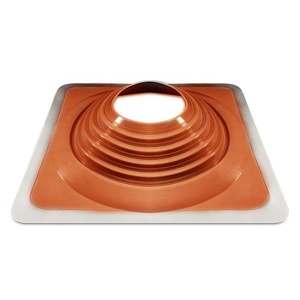
Engineered EPDM/silicone penetration boots designed for high-UV exposure, providing permanent weatherproofing around roof vents and MEP conduits.
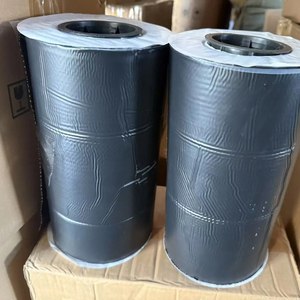
Heavy-duty vapor-tight self-adhesive butyl compound for sealing composite deck perimeters, side laps, parapets, and metal roof joins.
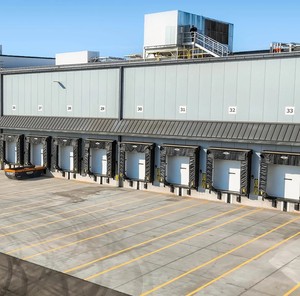
Integrated structural steel frame engineering coupled with continuous PIR insulation slabs for logistics hubs and perishable food distribution centres.
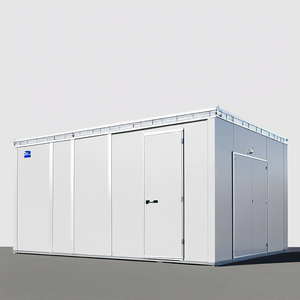
High-density polyurethane core walk-in cold rooms equipped with floor insulation barriers and hygienic surfaces compliant with food safety audits.
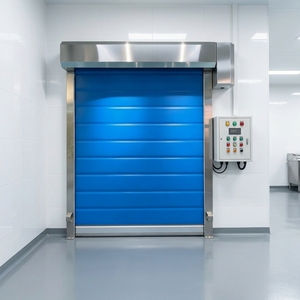
Heavy-duty food-grade sliding entrance systems featuring heated frame perimeter seals, preventing thermal bridging and ice buildup in low-temp operations.
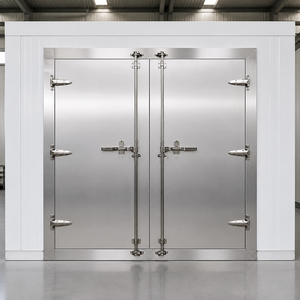
Acid-resistant, washable stainless steel double hinged doors constructed for cleanrooms, pharmaceutical warehouses, and seafood processing facilities.
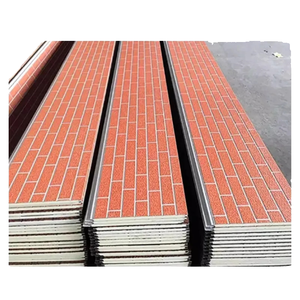
Continuous line fire-retardant polyisocyanurate panels delivering superior thermal resistance (λ = 0.022 W/m·K) to reduce warehouse cooling loads.
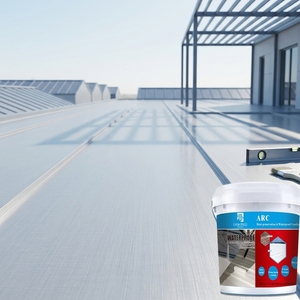
UV-reflective protective acrylic sealant formulated for fast seam refurbishment, screw-head encapsulation, and gutter protection under monsoonal rains.
In modern multistory industrial spaces and cleanroom mega-factories, steel-concrete composite floor decks (Sàn Deck mạ kẽm) serve a dual purpose: acting as structural formwork during casting and serving as the primary bottom tensile reinforcement in composite floor slabs.
Our galvanized decking profiles feature computer-optimized chevron and spherical embossments roll-formed along the web ribs. This guarantees mechanical shear bonding with the cured concrete slab, preventing longitudinal slippage under heavy dynamic forklift and machinery traffic without reliance on costly additional bottom rebars.
Utilizing high-tensile cold-rolled steel coils with yield strengths spanning Grade 50 (345 MPa) up to Grade 80 (550 MPa), our decking sections deliver high strength-to-weight ratios. This stiffness minimizes mid-span shoring requirements during casting, accelerating floor completion cycles to under five days per tier.
Engineered for the humid subtropical and industrial monsoon atmosphere of the Red River Delta basin. We supply thick-mass hot-dipped zinc coatings ranging from Z180 to Z275 (275 g/m²), along with SuperDyma / ZAM (Zinc-Aluminum-Magnesium) coatings that offer self-healing edge corrosion resistance.
| Profile Designation | Rib Height (mm) | Effective Width (mm) | Base Metal Thickness (mm) | Yield Strength (MPa) | Zinc Mass Coating | Maximum Unshored Span (m) |
|---|---|---|---|---|---|---|
| H50W1000 (Trapezoidal) | 50 mm | 1000 mm | 0.75 – 1.20 mm | ≥ 345 – 550 MPa | Z180 – Z275 | 2.20 – 2.80 m |
| H75W600 (Deep Trough) | 75 mm | 600 mm | 0.80 – 1.50 mm | ≥ 345 – 550 MPa | Z200 – Z275 / SuperDyma | 3.20 – 4.20 m |
| H76W914 (Industrial High-Span) | 76 mm | 914 mm | 0.90 – 1.60 mm | ≥ 350 – 550 MPa | Z275 / AZ150 | 3.50 – 4.50 m |
| H51W750 (Dovetail Interlock) | 51 mm | 750 mm | 0.80 – 1.20 mm | ≥ 345 – 450 MPa | Z180 – Z275 | 2.40 – 3.00 m |
Hanoi and the surrounding economic cluster (Bac Ninh, Hung Yen, Hai Duong, Vinh Phuc, and Hai Phong) are seeing rapid expansion in electronics, automotive, and logistics infrastructure. Galvanized composite floor decking has become the default structural floor system for fast-track projects.
The low-lying alluvial silt, high water tables, and compressible soft soil strata endemic to the Hanoi basin require structural engineers to minimize superstructure dead loads. Traditional reinforced cast-in-place concrete slabs (150 mm to 200 mm solid depth) demand massive foundations and dense deep-piling setups.
By shifting to cold-formed galvanized composite floor deck slabs (100 mm to 120 mm total composite thickness), structural engineers slash total slab dead weight by 30% to 40%. This weight reduction directly decreases lateral seismic inertial shear forces under Vietnamese building code TCVN 9386:2012 and slashes foundation piling expenditures by up to 18%.
For semiconductor fabrication and consumer electronics assembly in Bac Ninh and Thai Nguyen, decking profiles act as continuous horizontal diaphragm braces. Coupled with engineered shear connector studs (Đinh chống cắt), they minimize ambient machinery vibration to fulfill VC-A and VC-B vibration criteria.
Facing high land costs around Hanoi's Ring Road 3 and Ring Road 4, logistics developers are scaling vertically with multi-tier warehousing. Our deep-trough deck profiles allow long clear spans between steel frame bents, eliminating secondary beam clutter and maximizing vertical pallet clearances.
The annual "Nồm" phenomenon in Northern Vietnam introduces sustained 95%+ relative humidity and surface moisture condensation from February through April. Hot-dipped galvanized decking coated to Z275 standards prevents zinc white-rusting, offering unyielding corrosion defense during and after the construction cycle.
The transition toward industrialized prefabrication, strict fire codes, and sustainability standards is reshaping how engineering consultants evaluate structural decking specifications.
Vietnam’s revised fire regulations require explicit fire-resistance ratings (REI 60 to REI 120) for load-bearing floor slabs in industrial facilities. Our composite decking designs are paired with verified bar reinforcement models and intumescent spray coatings, validated to satisfy fire containment audits without requiring full underside soffit boarding.
To overcome job-site labor shortages and shorten delivery programs, top-tier Vietnamese contractors are adopting automated through-deck stud welding rigs. Our decking sheets are roll-formed with exact flat troughs to guarantee consistent electrical grounding during arc welding of shear studs straight onto structural steel beams.
With global multinationals requiring LEED Gold or LOTUS Green certifications for manufacturing assets in Northern Vietnam, composite metal decks eliminate single-use timber formwork. The high scrap-recycle ratio of structural steel and reduced concrete volumes directly slash the project's embodied carbon profile.
From technical calculation packages to fast maritime and overland transport, our production facilities provide high-volume manufacturing control, quality documentation, and dependable lead times.
Our facilities house multi-station cold-rolling lines capable of processing up to 10,000 m² of decking and profile sheets daily. Automated hydraulic shearing ensures precise length tolerances (±2 mm), minimizing site cutting, metal wastage, and crane operating time on multi-story erection projects.
Every coil batch is backed by Mill Test Certificates (MTC) certifying tensile yield strength, elongation, and zinc coating weight under ASTM A653, JIS G3302, and EN 10346 specifications. We supply verified documentation for consultant review and project owner audits.
Bulk shipments transit via Hai Phong Deep-water Port (Lach Huyen / Dinh Vu) with bonded clearance and direct flatbed transport along the Hanoi-Hai Phong Expressway (CT04) and National Route 5A. We stage timed deliveries aligned directly with your concrete pouring sequence.
Comprehensive answers addressing technical submittals, Vietnamese design code compliance, coating selections, and on-site handling for engineers and procurement directors.
Our galvanized composite floor deck profiles are fully compatible with structural calculations performed under TCVN 5575:2012 (Design of Steel Structures) and BS EN 1994-1-1 (Eurocode 4) for composite steel and concrete designs. We provide structural engineering design calculations covering positive and negative moments of inertia, section modulus, concrete ponding deflection checks, and shear bond interaction factors (m-k method). Project engineers can integrate our profile datasheets directly into ETABS, SAP2000, or Robot Structural Analysis models.
Northern Vietnam experiences extreme atmospheric humidity variations, marked by high summer heat and the damp Spring "Nồm" condition, during which relative humidity frequently lingers above 95% for several weeks. In industrial manufacturing districts with chemical or particulate exposure, specifying a lower coating weight like Z120 or commercial Z100 risks accelerated zinc depletion and edge corrosion. A certified Z275 (275 g/m² total both sides) or AZ150 (Aluzinc) coating guarantees long-term durability over the 50-year design lifespan of your facility.
Shear studs (commonly 16 mm or 19 mm diameter with length tailored to rib height and slab thickness) must be welded through the galvanized deck directly onto the structural steel beam top flange using dedicated stud welding equipment with ceramic ferrules. Our decking sheets are roll-formed with precise flat trough contact surfaces to prevent arcing gaps. Zinc coating vaporizes cleanly without leaving structural slag inclusions in the weld pool, achieving 360-degree full-collar fusion compliant with AWS D1.1 and TCVN welding provisions.
Under Vietnam's stringent fire code QCVN 06:2022/BXD, composite deck slabs can be designed for fire ratings of 60, 90, or 120 minutes (REI 60 – REI 120). While the bare steel decking profile handles room-temperature tensile forces, under fire conditions the bottom steel sheet gradually loses strength. To maintain structural capacity during a fire event, our technical team specifies supplementary steel wire mesh or positive rebar situated within the concrete slab ribs. The concrete topping insulates the floor to prevent thermal transfer to upper storeys.
For standard mezzanines or cleanroom electronics assembly with live loads around 3.0 to 5.0 kN/m², an open-trough H50W1000 profile at 0.75 mm or 0.95 mm thickness is cost-effective. However, for heavy-duty logistics facilities, battery manufacturing plants, or machine rooms with live dynamic loads exceeding 10.0 to 15.0 kN/m², we recommend our H75W600 or H76W914 profile at 1.0 mm to 1.20 mm thickness. Deep ribs deliver greater section modulus, supporting larger un-shored spans during the concrete pour and handling heavier concentrated point loads.
Decking sheets are custom-sheared to project lengths, strapped in seaworthy nested bundles with protective corner angles, wrapped in moisture-resistant film, and fitted with lifting slings. Ocean freight lands at Hai Phong Port container terminal or breakbulk docks, followed by bonded direct transport along National Highway 5A / Hanoi-Hai Phong Expressway directly to jobsites in Bac Ninh, Hung Yen, or Ha Nam. Bundles are marked by floor tier and grid zone to facilitate crane staging right from the transport flatbed.
Connect with our technical sales engineers to review span schedules, profile load charts, zinc coating requirements, and project submittal packages for your upcoming project in the Hanoi region.
Our sales engineers respond to project questions during working hours (GST+4).