PPGI Roofing Sheets Zinc Coated Building Materials
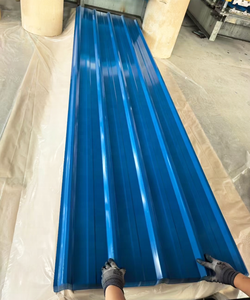
High-tensile zinc-coated roofing profiles engineered with corrosion-resistant primer and finish coatings to resist salty maritime mist in Tokyo Bay harbor facilities.
Technical DetailsEngineered to satisfy demanding Japanese building codes, our structural insulated metal panels, thermal cold storage solutions, and secondary framing systems guarantee airtight performance, structural stability against typhoons, and long-term durability in maritime urban conditions.
High-tensile zinc-coated roofing profiles engineered with corrosion-resistant primer and finish coatings to resist salty maritime mist in Tokyo Bay harbor facilities.
Technical Details
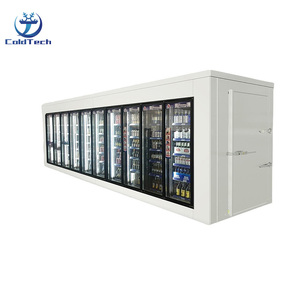
Ultra-efficient thermal insulated glass display enclosures for high-density Tokyo retail facilities, central bakeries, and fresh-logistics fulfillment hubs.
Technical Details
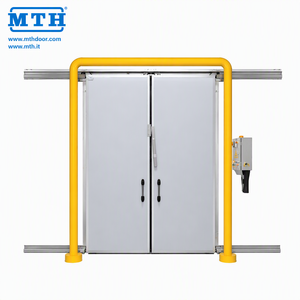
Grade 304 stainless steel cold-room sliding door featuring an engineered emergency exit break mechanism and patented track system for sub-zero freezer logistics.
Technical Details
Continuous double-belt laminated polyurethane and polyisocyanurate panels up to 200mm thickness, engineered for pharmaceutical cold storage and Toyosu fish market distribution.
Technical Details
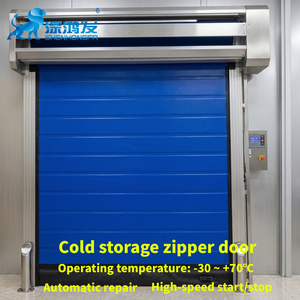
Rapid door automation with zip-track self-reinserting curtains, cutting air-infiltration loss between warm dispatch zones and frozen multi-tier Tokyo warehousing.
Technical Details
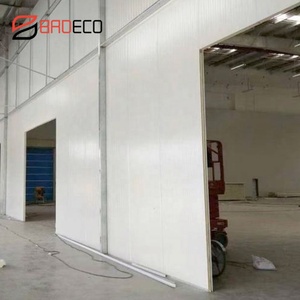
Tongue-and-groove internal cold room dividing panels offering quick modular installation for automated cleanrooms, battery manufacturing plants, and food separation zones.
Technical Details
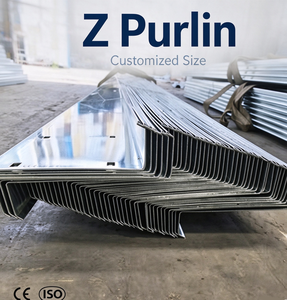
Cold-formed structural steel secondary framing sections with custom prepunched holes, manufactured for rapid lapping over continuous long-span multi-story warehouse roofs.
Technical Details
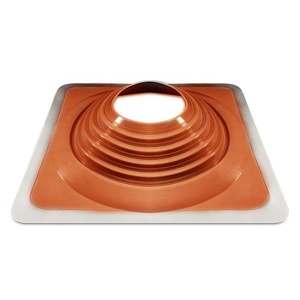
Molded elastomeric flexible flashing assemblies providing guaranteed watertight protection for rooftop HVAC, solar conduits, and vent pipes against severe typhoon rainwater ingress.
Technical DetailsAnalyzing the intersection of the Building Standard Law of Japan (BSL), strict Ministry of Land, Infrastructure, Transport and Tourism (MLIT) non-combustibility criteria, and seismic design specifications across Kanto's logistics and industrial real estate.
The Greater Tokyo commercial built environment operates under some of the most rigorous structural, seismic, and fire containment building codes worldwide. For general contractors (ゼネコン - Zenekon), architectural structural engineers, and facility developers erecting modern multi-story logistics hubs in Koto-ku, Shinagawa, Ota-ku, or the sprawling distribution nodes along Chiba and Saitama prefectures, selecting the right building envelope supplier is a critical engineering decision. Insulated Metal Panels (IMPs) serve as both the principal thermal barrier and the exterior architectural skin, requiring meticulous alignment with the Building Standard Law of Japan (建築基準法, Kenchiku Kijun-hō).
Unlike conventional single-skin profiled sheet installations with separate field-applied glass wool blankets, our continuous-line manufactured sandwich panels integrate high-density polyisocyanurate (PIR) or structural rockwool mineral cores adhesively bonded between zero-spangle, prepainted galvanized or Galvalume (55% Al-Zn) steel facings. This composite architecture delivers exceptional structural diaphragm strength, superior air-and-vapor barriers, and thermal transmittance values (U-values) as low as 0.11 W/(m²·K) in heavy cold-storage configurations, directly supporting Tokyo’s aggressive Net Zero Energy Building (ZEB) targets.
Crucially, Tokyo’s coastal belt faces twin engineering challenges: acute seismic vulnerability necessitating dynamic story-drift flexibility (typically calculated at 1/200 to 1/150 allowable drift angle during level-2 ground motions) and aggressive salt spray corrosion emanating from Tokyo Bay. Our panels incorporate concealed fastener interlocking joinery equipped with factory-applied non-skinning butyl sealants, ensuring moisture imperviousness and wind-uplift resistance certified up to 4.5 kPa—easily mitigating severe summer typhoons and storm surges.

Our engineered tongue-and-groove male-female joints are precision-milled with micro-gap allowances that accommodate multi-axis lateral seismic displacement without panel delamination, steel buckling, or perimeter air leakage. Tested under cyclic horizontal shear loads replicating Kanto Plain earthquake patterns, this dry-construction modular joint keeps critical logistics and pharmaceutical warehouses fully operational immediately following seismic events.
Consult this data matrix to balance thermal conductance, MLIT fire resistance classifications, mechanical compressive strength, and dead-load ratios across Tokyo industrial applications.
| Insulation Core Type | Nominal Density (kg/m³) | Thermal Conductivity (λ W/m·K) | Fire Classification (MLIT / ISO) | Compressive Strength (kPa) | Primary Tokyo Application Sector |
|---|---|---|---|---|---|
| Continuous PIR (Polyisocyanurate) | 40 – 42 kg/m³ | 0.020 – 0.022 | Flame-Retardant / Low Smoke (BSL Art. 2) | ≥ 150 kPa | High-Cube Logistics, Automated Racked Storage, Bay Area Warehouses |
| Structural Rockwool (Mineral Wool) | 110 – 130 kg/m³ | 0.038 – 0.042 | Non-Combustible (不燃材料認定 NM-Series equivalent) | ≥ 100 kPa | Fire Compartment Walls, Hazardous Material Zones, High-Density Urban Corridors |
| Rigid PUR (Polyurethane) | 38 – 40 kg/m³ | 0.023 – 0.025 | Standard Self-Extinguishing Grade | ≥ 140 kPa | Agricultural Packaging, Secondary Cold Chillers, Low-Rise Suburban Sheds |
| Ultra-Dense PIR Freezing Core | 45 – 48 kg/m³ | 0.019 – 0.021 | PIR Class 1 FM 4880 / 4881 Standards | ≥ 180 kPa | Deep Freeze (-30°C to -60°C) Marine Cargo Terminals, Toyosu Cold Chain Hubs |
Fire Performance Insight: Within Tokyo’s Urban Fire Prevention Districts (防火地域, Bōka Chiiki) and Semi-Fire Prevention Districts, MLIT non-combustible material certification (不燃材料認定) is strictly enforced. While Polyisocyanurate (PIR) represents the premier equilibrium of insulation value per millimeter of wall thickness and lightweight seismic dead-load efficiency, our Structural Lamella Rockwool Panels provide an entirely inorganic, non-flammable alternative that releases zero toxic gasses or flaming droplets under 1,000°C furnace exposure for 1 to 2 hours, making them mandatory along property lot-line boundary fire separation walls.
From waterfront wharf logistics to inland hyperscale datacenters, our insulated panel solutions meet Tokyo's specialized construction paradigms.
Tokyo's industrial footprint relies heavily on 4- to 6-story ramp-up logistics complexes along the Wangan (Bayshore) expressway. Our large-format vertical insulated wall panels enable rapid dry installation across vast exterior steel frameworks, cutting total erection schedules by 30% compared to precast concrete panels while providing high acoustic insulation against heavy truck traffic.
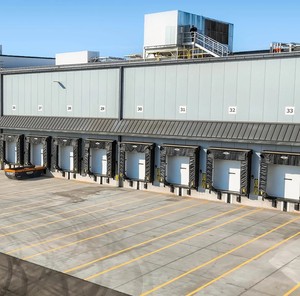
Supporting high-throughput temperature-controlled facilities across Toyosu, Oi, and Yokohama ports. We supply 150mm–200mm thick PIR insulated metal panels finished with PVDF or food-safe plastisol coatings that endure rigorous daily high-pressure washdowns and completely halt vapor transmission into freezer zones running at -25°C.
Western Tokyo and Chiba cluster massive server facilities that require airtight, moisture-impervious enclosures with ultra-low thermal bridging to maximize Power Usage Effectiveness (PUE). Our tongue-and-groove concealed-fastener insulated wall facades provide electromagnetic interference (EMI) dampening, sound attenuation, and fire barriers.
Precision electronics and biopharmaceutical manufacturing corridors require particle-free, flush-surface partition systems. Our smooth-faced metal sandwich wall and ceiling systems assemble with seamless silicone or welded joints, preventing bacterial harborage while supporting walk-on maintenance ceiling plenum requirements.
Strategic analysis of Japanese regulatory shifts, labor demographic constraints, and green building standards impacting envelope specifications.
Revisions to overtime regulations for commercial truck drivers in Japan have accelerated the development of suburban mega-fulfillment complexes along the Ken-O Expressway. Developers require hyper-efficient insulated building envelopes that streamline construction times and maintain constant internal climates for automated robotic sorting.
The Tokyo Metropolitan Government has enacted aggressive carbon-reduction policies requiring commercial structures to achieve rigorous Energy Efficiency Index (BEI) ratings. Specifying panels with thermal conductivities below 0.022 W/m·K dramatically minimizes HVAC sizing and ongoing electricity consumption.
Japan’s construction trades face an aging master technician workforce. Modular, lightweight, pre-finished insulated metal panels replace multiple labor-intensive on-site wet trades (plastering, external sheet fitting, internal drywall, insulation packing), delivering factory-certified tolerances with compact installation crews.
Typhoons striking the Kanto area generate violent horizontal wind pressure accompanied by wind-driven rain. Modern Tokyo specifications mandate panel envelope assemblies subjected to dynamic water infiltration testing under cyclic pressures exceeding 1,500 Pa, favoring continuous factory-foamed interlocking profiles.
Combining automated continuous high-speed double-belt lamination, strict quality control traceability, and turnkey structural envelope manufacturing.
State-of-the-art continuous polyurethane and rockwool roll-forming lines guarantee uniform core density distribution, precise thickness calibrations (50mm–200mm), and mill-finish tolerances capable of supplying Tokyo's largest logistics facilities without jobsite delays.
Beyond insulated sandwich panels, we manufacture complementary structural cold-rolled Z/C purlins, steel decking sheets, color-matched flashing trims, and heavy industrial cold room doors. This eliminates component mismatch errors and streamlines on-site coordination.
Standard panels for the Tokyo coastal corridor incorporate hot-dip galvanized (Z275) or Galvalume (AZ150) substrates shielded by 25-micron high-durability fluorocarbon (PVDF) or SMP resin topcoats, resisting industrial sulfur pollutants and maritime salt aerosol breakdown.
Every shipment is backed by comprehensive Mill Test Certificates (MTC), core compressive load data, thermal conductance calibration records, and full batch traceability documents prepared for submission to local Japanese building inspectors and structural engineers.
Key technical insights on importing, certifying, and specifying insulated metal panels for Greater Tokyo construction sites.
For applications where Article 2, Clause 9 of the Building Standard Law applies, we provide structural rockwool core sandwich panels manufactured with inorganic mineral fiber bonded to zinc-coated steel skins. Project-specific test data, fire rating duration curves, and third-party laboratory evaluations are supplied to support official architect submittals.
Our concealed fixing clips and slotted purlin fastener designs allow for in-plane lateral displacement up to a 1/150 drift angle. During ground motion, panels float slightly across the sub-framing without structural skin shearing, joint tear-out, or compromise to the airtight interior vapor seals.
Shipments depart via scheduled ocean container lines or specialized breakbulk vessels directly to the Port of Tokyo (Aomi/Oi container terminals) or Port of Yokohama. Standard ocean transit averages 14–22 days depending on the dispatch route, packed securely in weather-sealed, crated bundles with dedicated ocean moisture desiccant bags.
Yes. Continuous line double-belt casting allows custom single-span panel fabrication up to 13.5 meters (dictated by 40ft High Cube container dimensions) or even longer for breakbulk vessels. Eliminating mid-wall horizontal joints enhances aesthetic purity and prevents potential water intrusion paths during severe typhoon events.
For coastal warehouses within 3 km of Tokyo Bay, we strongly recommend a minimum 70% Kynar 500 / Hylar 5000 PVDF (Polyvinylidene Fluoride) finish or Super Polyester (SMP) coating over a 275 g/m² hot-dipped zinc steel skin. This resists chloride pitting, UV degradation, and chalking for up to 25+ years.
For deep freezer facilities handling seafood, meat, and processed perishables in Kanto, 150mm to 200mm continuous PIR core panels are specified. The resulting U-values (0.11 to 0.14 W/m²·K) completely prevent exterior panel condensation under hot, humid Tokyo summer ambient conditions (38°C / 85% RH).
Our engineering support team generates comprehensive load-span capacity tables calculated according to Japanese wind-pressure formulations ($q_w = 0.6 \times E \times V_0^2$). We confirm permissible deflection limits ($L/200$ to $L/240$) for both single and multiple-span conditions across Tokyo design wind zones.
Yes. We engineer and fabricate all internal/external corners, parapet caps, base drips, and framed window/louver trims using the identical coil batch to ensure flawless color matching. We also supply factory-tested non-skinning butyl sealing tapes, EPDM pipe boots, and specialized thermal break isolators.
Whether you are designing a multi-tier distribution terminal in Tokyo Bay, an advanced cleanroom facility in Kanagawa, or a cold storage logistics warehouse along the Ken-O highway, collaborate directly with our engineering team for optimized panel profiles, structural submittals, and factory-direct pricing.
Get a QuoteOur sales engineers respond to project questions during working hours (GST+4).