
Manufactured on high-speed continuous roll-forming and high-pressure foaming lines, our modular envelope components satisfy European technical standards (EN 14509, EN 13501-1) for commercial, industrial, and climate-controlled Parisian developments.
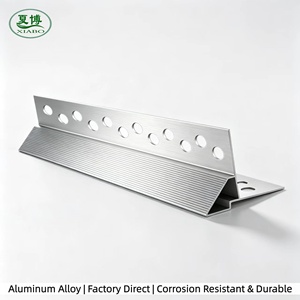
Perforated architectural drip trim offering engineered rainwater shedding, optimized eave ventilation, and thermal facade interface protection.
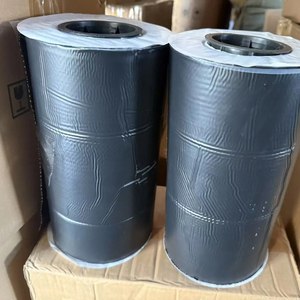
High-elongation weatherproofing membrane with cross-linked butyl adhesive for long-term airtight and watertight sealing across metal and tile roof joints.

Rigid polyurethane/polyisocyanurate continuous foam panels with double tongue-and-groove jointing, ensuring low U-values and thermal-bridge-free performance.
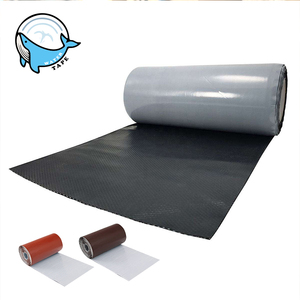
Reinforced aluminum expandable mesh embedded in premium butyl for complex chimney, parapet, and skylight transitions requiring zero UV degradation.
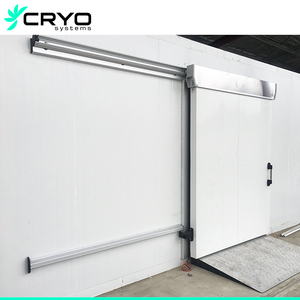
PIR injected door leaves equipped with integrated perimeter resistance heaters, self-lubricating track systems, and hermetic drop gaskets.
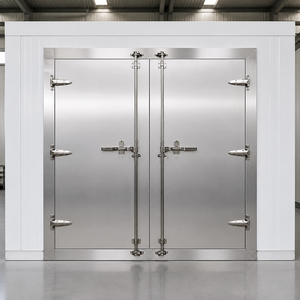
Sanitary grade stainless steel double-leaf hinged doors designed for intense pallet traffic, food-safety compliance, and zero corrosion in aggressive washdowns.
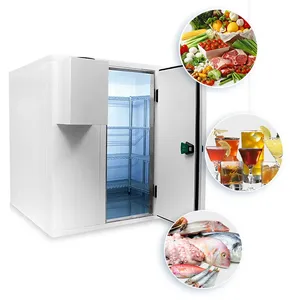
Cam-lock modular panel rooms tailored for urban micro-fulfillment, hospitality kitchens, and pharmaceutical preservation across Parisian metro sectors.
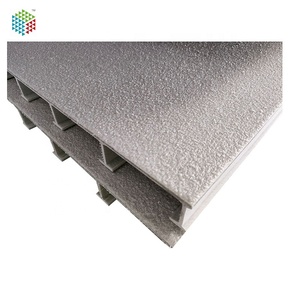
Corrosion-proof, fiber-reinforced polymer walkway and rooftop access boards delivering superior load-to-weight ratios and anti-slip quartz surfacing.
Designing modern commercial facades and industrial envelopes in the Île-de-France region requires balancing strict environmental directives, high acoustic thresholds, and exacting fire regulations.
France's Réglementation Environnementale 2020 (RE2020) shifts the focus from simple operational energy efficiency to full life cycle analysis (Analyse du Cycle de Vie - ACV). External cladding systems must exhibit low embodied carbon indices (Ic construction).
Our continuous manufacturing facilities utilize optimized steel thicknesses (0.5 mm to 0.7 mm high-tensile S280GD/S320GD) and zero-ODP, low-GWP pentane-blown polyisocyanurate cores that align with European Environmental Product Declarations (EPD / FDES).
For Parisian public access buildings (Établissements Recevant du Public - ERP) and multi-storey industrial structures, compliance with Instruction Technique 249 (IT 249) is legally mandated to eliminate external flame spread along vertical cavities.
Our structural non-combustible Rockwool panels provide Euroclass A2-s1,d0 or A1 ratings with structural fire resistance from EI 60 to EI 240, while our specialized PIR cores achieve B-s1,d0 with self-extinguishing polyisocyanurate ring networks that form an insulating char layer upon thermal exposure.
Industrial parks around the Boulevard Périphérique, the A86 ring road, and the Francilienne (A104) are subject to French Environmental Health Directives requiring substantial facade sound attenuation (NRA - Nouvelle Réglementation Acoustique).
By pairing high-density lamella mineral wool cores (100–120 kg/m³) with multi-layered steel facings and acoustic labyrinth interlocks, our composite wall assemblies achieve weighted sound reduction indices of Rw up to 34 dB without auxiliary secondary linings.
From the massive logistics corridors of the Seine-Nord axis to urban infill retrofits in Plaine Commune, our exported panel systems provide purpose-engineered building envelopes tailored to specific territorial functions.
The Marché d'Intérêt National (MIN) de Rungis, handling millions of tonnes of agri-food products annually, requires uncompromised isothermal enclosures. Our PIR wall panels and CRYOMAX 304 stainless steel cold-room doors create a hermetically sealed barrier capable of maintaining internal temperatures between -28°C and +4°C against summer ambient peaks.
Engineered with double labyrinth tongue-and-groove joints, factory-applied intumescent seals, and specialized vapor barriers, these assemblies eliminate micro-thermal infiltration and condensation cycles that trigger mold proliferation or refrigeration compressor overload.
As part of the Grand Paris Express regional redevelopment, brownfield warehouses along the Port de Gennevilliers and Saint-Denis are being converted into modern last-mile distribution terminals and high-tech clean manufacturing centers.
Our concealed-fastener insulated wall systems offer smooth, micro-ribbed, and architectural plank facings that satisfy the aesthetic requirements of local municipal planning agencies (Plan Local d'Urbanisme - PLU). Simultaneously, their fast interlocking installation cuts on-site crane time by up to 45% compared to wet-trade masonry, reducing street-level urban disruption.
The southern and eastern technology arcs of Paris host critical cloud computing data centers where uptime, fire compartmentalization, and thermal consistency are non-negotiable. Building designs demand non-combustible envelope specifications that resist external fire spread while isolating heat generated by high-density server racks.
Our structural Rockwool sandwich panels serve as both exterior curtain cladding and internal separation bulkheads, delivering certified EI 120 fire resistance. The high thermal mass of the stone wool fibers dampens diurnal temperature oscillations, cutting cooling power requirements.
Facilities bordering the Seine River face elevated relative humidity and seasonal freeze-thaw cycles that attack standard organic coatings. Our panels destined for Parisian quayside depots are specified with multi-layer high-durability polymer coatings, including 50μm Polyurethane-Polyamide (HDP) and PVDF formulations.
This corrosion-resistant barrier provides RC5 corrosion resistance and RUV4 UV resistance ratings under EN 10169, preventing blistering, chalking, or delamination even under continuous exposure to urban industrial contaminants and river mist.
Selecting the optimal insulation core is governed by thermal resistance targets, local French fire regulations (ERP vs. Code du Travail), and structural span criteria. Below is our engineering baseline comparison.
| Insulation Core Type | Density (kg/m³) | Thermal Cond. λ (W/m·K) | Euroclass Fire Rating | Acoustic Rw (dB) | Best Parisian Application Focus |
|---|---|---|---|---|---|
| PIR (Polyisocyanurate) | 40 – 42 kg/m³ | 0.022 W/m·K | B-s1, d0 | ~26 – 28 dB | High-efficiency commercial roofs, logistics centers, RE2020 low-energy warehouses |
| PUR (Polyurethane) | 38 – 40 kg/m³ | 0.024 W/m·K | B-s2, d0 / C-s2, d0 | ~25 – 27 dB | Standard industrial workshops, secondary agricultural enclosures, internal partition walls |
| Rockwool (Mineral Fiber) | 100 – 120 kg/m³ | 0.040 W/m·K | A2-s1, d0 (Non-Comb.) | 32 – 35+ dB | Public buildings (ERP), high-rise envelopes (IGH), transformer enclosures, acoustic barriers |
| Cold-Chain Heavy PIR | 42 – 45 kg/m³ | 0.021 W/m·K | B-s1, d0 | ~28 dB | Sub-zero freezers (-30°C), pharmaceutical storage, food distribution cold hubs |
*Note: Test methodologies follow EN 12667 for thermal conductivity, EN 13501-1 for reaction to fire, and EN ISO 10140-2 for acoustic testing. Complete factory test reports are submitted with all tender proposals.
Combining heavy automated continuous processing lines with streamlined multimodal maritime export channels, we deliver tailored architectural envelopes directly to Parisian staging yards on schedule and fully documented.
Continuous automated 40-meter caterpillar double-belt laminating presses guarantee uniform density distribution, zero voids, and high peel strength between steel skins and core insulation.
In-house laboratory batch sampling tests shear modulus, compressive stress, tensile bond strength, and micro-bubble foam uniformity in strict alignment with EN 14509 specifications.
Direct ocean container and breakbulk shipping into Port 2000 (Le Havre), connecting via inland Seine river barges directly to Paris-Gennevilliers or Bonneuil-sur-Marne inland ports, avoiding city trucking limits.
We provide full technical submittals, AutoCAD/BIM panel layout details, structural span calculations (wind uplift & snow load under Eurocode 1 & 3), and verified CE/EN conformity documentation.
Expert answers addressing the regulatory, structural, and logistical questions commonly encountered by French general contractors, design offices (Bureaux d’Études), and quantity surveyors.
Under RE2020, external building walls must achieve stringent average heat transfer coefficients (U-values typically ranging between 0.15 and 0.20 W/m²·K). Our PIR continuous panels, offering an ultra-low thermal conductivity of λ = 0.022 W/m·K, attain an R-value of 5.45 m²·K/W at just 120 mm thickness, easily exceeding baseline performance while conserving usable internal floor area.
Yes. All our factory production runs conform to standard NF EN 14509 (Self-supporting double skin metal faced insulating panels). Our export documentation includes factory production control (FPC) audit reports, Declaration of Performance (DoP), and CE Marking identifiers, allowing seamless approval by French control bureaus (e.g., Socotec, Bureau Veritas, Apave).
Deliveries into the Greater Paris metropolitan area are staged to comply with local Zones à Faibles Émissions (ZFE-m / Low Emission Zones) and municipal height/weight delivery curfews. Cargo arrives via container or flat-rack at deep-water terminals (Le Havre), transfers directly to Euro-6 or hybrid flatbed trucks with extendable trailers, or reaches Seine-side staging berths equipped for just-in-time craned site delivery.
Yes. Urban master plans (PLU) in historical and protected perimeters around Paris frequently reject bright or industrial metallics. We formulate coil finishes in matte architectural tones, including standard Parisian zinc grey (RAL 7016, RAL 7035, RAL 7021), off-whites, and bespoke textured micaceous iron oxide coatings with gloss levels below 10-15% to comply with Architectes des Bâtiments de France (ABF) directives.
For standard wind zone II and III terrain categories (typical across Île-de-France), our 100 mm PIR wall panels with 0.6 mm exterior and 0.5 mm interior steel facings readily achieve single spans of 3.5 m to 4.2 m, and multi-spans up to 5.0 m within permissible L/200 deflection limits. Our structural engineers provide project-specific static load calculations based on NF EN 1991-1-4 (Eurocode 1 Action on structures).
Achieving regulatory French airtightness standards (Q4Pa-surf ≤ 0.60 m³/(h·m²) in RE2020 testing) requires an integrated assembly. Along with our primary insulated panels, we manufacture matched aluminum lower-eave drip flashings, self-adhesive lead-free EPDM butyl sealing tapes, PVC thermal break shims, and pre-formed corner pieces to create an airtight, moisture-impermeable envelope barrier.
The industrial facade sector across France is undergoing rapid technological transformation. Our manufacturing investments keep your projects ahead of changing regulatory and architectural demands.
As RE2020 lifecycle carbon thresholds tighten toward the 2028 and 2031 benchmarks, our development pipeline is incorporating mass-balanced bio-polyols and circular MDI chemical inputs. This reduces the embodied carbon index of our PIR foams by up to 28% without altering thermal conductivity or mechanical compressive values.
With acute shortages of specialized on-site installation labor across Île-de-France, builders are shifting toward off-site pre-assembly. We supply factory-notched, pre-milled corner units and panels pre-fitted with integrated conduits and perimeter gaskets, dramatically accelerating envelope close-in milestones.
Major French engineering infrastructure groups (Vinci, Bouygues, Eiffage) utilize advanced building information modeling (BIM). We provide fully configured parametric Revit and IFC object libraries containing exact mechanical properties, thermal transmittance, and lifecycle data for direct integration into project federated models.
Our sales engineers respond to project questions during working hours (GST+4).