
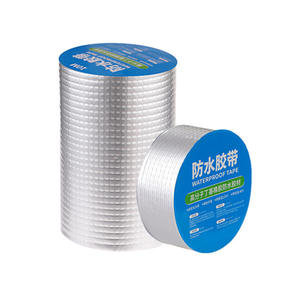
Export Ready Product Matrix
High-Performance Flashing Solutions & Engineered Penetrations
Precision-moulded and rolled weatherproofing components fabricated to withstand cyclonic wind-driven rain, extreme UV indices, and thermal building movements across all Australian states.
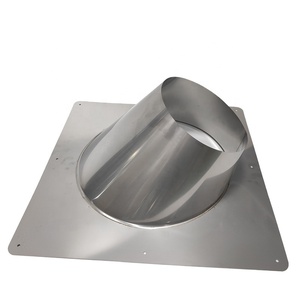
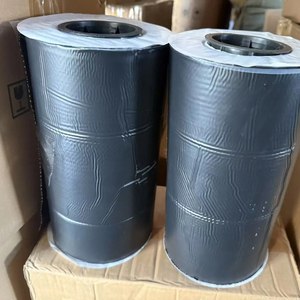
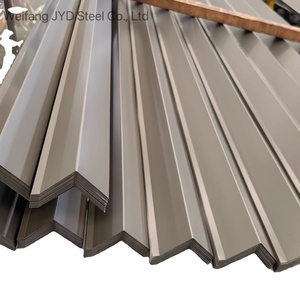
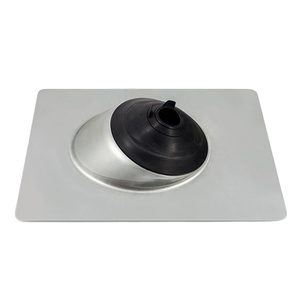
100%
Lead-Free Non-Toxic Formulation
-40°C to 150°C
Elastomeric Thermal Stability
BAL-40 / FZ
Bushfire Attack Level Options Available
20+ Years
Accelerated Weathering Service Life
Architectural Specification & Structural Compliance for the Australian Envelope
In Australia's demanding commercial and residential roofing sector, the roof perimeter and penetration junctions constitute over 85% of building envelope warranty failures. Designing and supplying metal roof flashings for this territory requires a comprehensive understanding of both mechanical mechanics and local codes. The Building Code of Australia (BCA) and National Construction Code (NCC 2022 Volume Two) mandate rigorous compliance with AS/NZS 2904 (Damp-proof courses and flashings), AS 1562.1 (Design and installation of sheet roof and wall cladding), and AS 3959 (Construction of buildings in bushfire-prone areas).
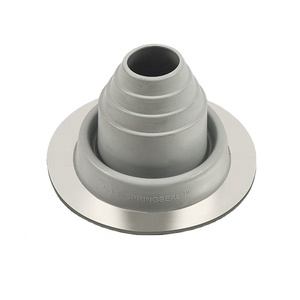
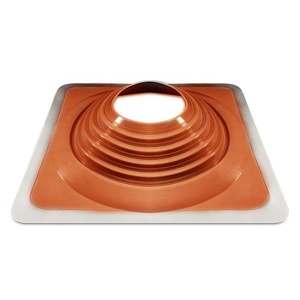
Our manufacturing facility engineers roof flashings, flexible boots, and butyl barrier tapes that satisfy these specific mechanical metrics. Unlike standard industrial compounds, flashing components bound for Melbourne, Sydney, Brisbane, or remote Pilbara mining infrastructure must survive an ultra-violet index frequently exceeding 12, extreme diurnal temperature variations spanning 45°C within a single 12-hour cycle, and corrosive airborne marine salts (classified up to ISO 9223 Category C5-M).
Technical Note on Potable Rainwater Harvesting: Australian residential construction frequently routes roof runoff into domestic rainwater retention tanks. In compliance with AS/NZS 4020 (Testing of products for use in contact with drinking water), our manufactured composite flashing products feature 100% lead-free, non-carcinogenic butyl matrices that eliminate heavy-metal leaching while maintaining exceptional adhesion across prepainted steel (Colorbond®-compatible), zinc-aluminum alloys, and terracotta tile profiles.
| Performance Parameter | OEM Factory Compound (EPDM / Butyl) | Generic Commercial Flashing | Regulatory Standard & Target |
|---|---|---|---|
| UV Photodegradation Resistance | Zero cracking after 2,500 hrs QUV-A Exposure | Micro-fissures observable at < 500 hrs | ASTM G154 / AS 4040.4 Compliance |
| Tensile & Elongation Capacity | > 450% Elongation at break (Dynamic Recovery) | < 200% (High risk of shearing on expansion joints) | AS/NZS 2904 Tensile Verification |
| Continuous Temperature Rating | -40°C to +115°C (Intermittent up to +150°C) | -10°C to +70°C (Slumping/bleeding under dark roofs) | NCC Hot-Roof Cavity Standards |
| Galvanic Incompatibility Risk | Inert EPDM / Non-conductive Butyl Polymer | Direct copper/carbon fillers causing pitting | AS 1562.1 Dissimilar Metals Isolation |
Field Engineering
Engineered for Australia’s Extreme Geographic Microclimates
From cyclonic coastal fronts to severe desert heat and bushfire corridors, our product configurations solve localized structural challenges.
Tropical Cyclonic Zones (AS 4055 Region C & D)
In Far North Queensland and coastal Western Australia, cyclonic wind gusts induce extreme differential negative pressure. Our galvanized drip edge trims and pipe flashings feature wide aluminum mounting collars and high-shear butyl adhesives designed to prevent uplift and water ingress under horizontal wind-driven rain.
Bushfire Prone Corridors (AS 3959 BAL-12.5 to BAL-FZ)
Embers attacking roof penetrations are the primary vector for internal residential ignition. We manufacture high-temp silicone boots and fire-rated composite flashing materials that maintain structural seal integrity up to 250°C, blocking burning embers from infiltrating the internal roof cavity.
Industrial & Rooftop Solar Infrastructure
Rooftop commercial solar arrays across NSW and Victoria require thousands of roof penetrations for conduit and mounting stanchions. Our high-flex EPDM pipe flashings isolate mechanical vibration, absorb ongoing thermal expansion cycles, and ensure leak-free operation over decades.
Market Evolution: Modern Trends Transforming Australian Roof Procurement
The Australian metal roofing market is experiencing a profound transition driven by regulatory tightening, environmental health imperatives, and modern building automation. B2B importers, builders, and wholesale distributors are standardizing on three major shifts:
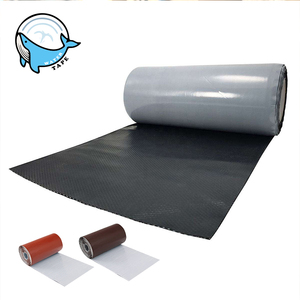
1. Complete Phase-Out of Toxic Lead Flashings: Historical reliance on lead aprons has rapidly evaporated due to stringent workplace health and safety (WHS) handling protocols, environmental contamination risks, and consumer demand for pristine rainwater harvesting. Advanced synthetic polymers—combining butyl rubber with embedded expandable aluminum mesh—deliver identical malleable draping characteristics around deep corrugated valleys without toxic residue.
2. Solar PV Penetration Surges & Thermal Load Increases: With Australia leading the world in per-capita rooftop solar installations, roof sheeting is exposed to concentrated thermal traps beneath photovoltaic modules. Flashing components must resist sustained elevated operating temperatures without oil separation, tack degradation, or brittleness.
3. Architectural Color Matching & Matte Finishes: Modern Australian architectural styles emphasize aesthetic cohesion. Importers increasingly specify flashing collars and tapes pre-matched or chemically treated to complement popular Colorbond® palettes (including Monument®, Surfmist®, and Basalt®) while maintaining UV stability.
Manufacturing Capabilities
Why Australian Wholesalers & Distributors Partner With Us
Direct-from-factory volume pricing, precise ISO 9001 certified batch repeatability, and comprehensive supply chain reliability.
Certified In-House Production Lines
Continuous automated rubber extrusion, metal brake pressing, and vulcanizing lines operate under verified quality management systems. Every roll of butyl and EPDM boot is tested for thickness uniformity, adhesion peel strength, and tensile resilience before packaging.
OEM Customization & Private Label
We provide full white-label OEM support for Australian wholesale brands, including customized release liners, printed retail packaging, specific roll widths (from 50mm to 1000mm), and tailor-made baseplate tooling to match specific corrugated or trimdeck profiles.
Optimized Container Shipping & Logistics
Palletized moisture-barrier export crating engineered to withstand sea freight through tropical corridors without polymer compression or roll deformation. Reliable containerized delivery directly to Fremantle, Melbourne, Sydney, and Brisbane ports.
Procurement Intelligence
Frequently Asked Questions: Purchasing & Compliance in Australia
Key technical and logistics inquiries answered for trade importers, commercial roofing contractors, and building product distributors.
Q: How do your EPDM flashing boots handle galvanic corrosion on Zincalume® roofs?
Our pipe flashing assemblies utilize electrically inert EPDM compounded without carbon black additives that could conduct stray galvanic currents. The integrated edge is composed of malleable, corrosion-resistant aluminum alloy, ensuring zero galvanic reaction when installed with approved Class 4 / Class 5 mechanical fasteners.
Q: Can your lead-free flashing tape replace traditional lead step flashings on brick parapets?
Yes. Our lead-free butyl flashing roll with embedded aluminum mesh stretches up to 30% in both longitudinal and transverse axes. It easily dresses into mortar joints, follows irregular masonry surfaces, and creates an airtight seal without the sagging or cracking associated with heavy metal aging.
Q: What documentation is provided for Australian certifier and engineer approvals?
We supply full mill test certificates, AS/NZS 2904 material compliance datasheets, accelerated artificial weathering test reports (ASTM G154 / QUV), and potable water assessment documentation (AS/NZS 4020) with every commercial shipping lot.
Q: What is your typical production lead time and minimum order quantity (MOQ) for custom profiles?
Standard profile pipe boots and regular stock butyl tape rolls carry an MOQ of 500 units per size, with factory dispatch within 15–20 business days. Custom-engineered stampings or custom-color EPDM compounds typically require a 30-day initial tooling and prototyping cycle.
Request Wholesale Pricing & Specification Submittal Packs
Connect with our senior technical export team today to receive detailed technical datasheets, factory test certificates, free physical sample parcels, or a fast container-load freight quotation.