Insulated Doors Cold Room Sliding Door Cold Storage Door
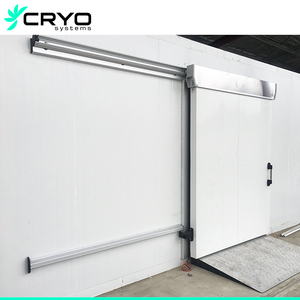
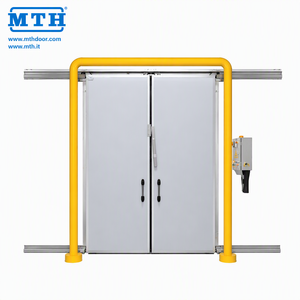
Heavy-duty sliding entrance door for temperature-controlled cold stores down to -25°C. Features internal emergency safety release, heated aluminum door frames, and EPDM co-extruded gaskets.
Explore our certified cold storage access doors and insulated sandwich panel enclosures, designed with high-density polyurethane (PU) and non-combustible mineral wool to satisfy strict thermal, hygienic, and structural MEP codes.
Heavy-duty sliding entrance door for temperature-controlled cold stores down to -25°C. Features internal emergency safety release, heated aluminum door frames, and EPDM co-extruded gaskets.
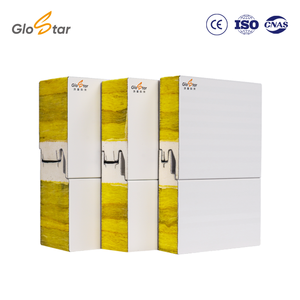
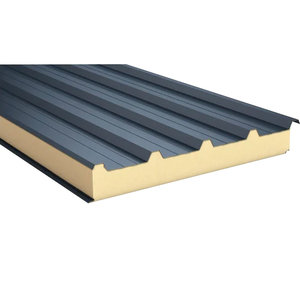
Non-combustible stone wool/glass wool core sandwich panels built for fire-separation partitions in logistics facilities, external cold storage roofs, and industrial manufacturing plants.
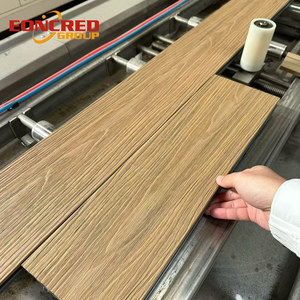
High-tensile load-bearing composite panels engineered for humidity-prone exterior wall facades, loading docks, elevated platforms, and cold room antechamber corridors.
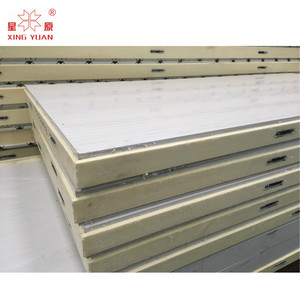
Continuous cyclopentane-injected rigid PUR/PIR panels (42 kg/m³ density) offering superior lambda insulation (λ ≤ 0.021 W/m·K) for blast freezers and sub-zero seafood storage.
Bi-parting heavy industrial cold room door outfitted with Italian MTH-style drop tracks, complete stainless steel cladding, and dual safety release systems for wide forklift transit.
Cost-effective expanded polystyrene insulated panels paired with zinc-coated PPGI skin, tailored for medium-temperature fruit ripeners, dry drywarehouses, and modular processing zones.
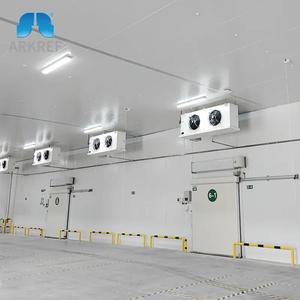
Precision cam-lock interlocking panels featuring non-slip chequered aluminum floor sheets, eliminating thermal bypass in walk-in chillers, dark stores, and hospitality cold rooms.
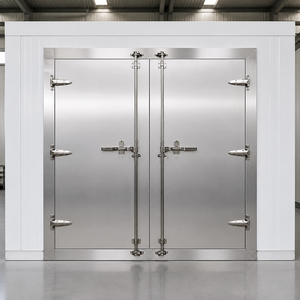
Sanitary grade SUS304 swing container doors equipped with rise-and-fall cam-lift hinges, silicone magnetic gasket compression, and internal anti-freeze heating cables for heavy traffic.
Designing cold room entrance systems for the Mumbai Metropolitan Region (MMR) demands rigorous consideration of ambient thermodynamics. With coastal summer dry-bulb temperatures reaching 38°C to 42°C coupled with relative humidity (RH) routinely exceeding 85% to 95% during the prolonged Arabian Sea monsoon, conventional industrial doors suffer severe condensation, perimeter icing, and accelerated galvanic corrosion.
Our OEM/ODM cold room door systems incorporate multi-cavity extruded aluminum thermal break profiles with polyamide PA66 GF25 thermal barriers. This architectural separation physically isolates the exterior metal cladding from the interior cold-face frame, curtailing conductive heat loss (U-value down to 0.28 W/m²·K on 150mm door leaves) and eradicating exterior sweating that leads to mold growth and slip hazards.
Anti-Condensation Metric: Operating at an internal room temperature of -22°C with exterior ambient conditions of 35°C at 90% RH (Dew Point ~33.1°C), our integrated low-wattage (40W/m) self-regulating PTC silicone heating ribbons inside the door perimeter and floor threshold prevent condensation without consuming excessive electrical power.
Furthermore, standard mechanical fasteners in marine atmospheres fail prematurely due to airborne chlorides. We utilize exclusively AISI 304 and 316 austenitic stainless steel tracks, carriage rollers, internal fasteners, and handle linkages, coupled with high-tear-strength co-extruded EPDM/Santoprene hermetic gaskets that maintain elasticity down to -50°C.
Italian-engineered drop-down rail geometry lowers the door leaf at a 45-degree angle during final closure, compressing gaskets simultaneously against both frame and finished floor for an airtight seal.
Heavy-duty brass and stainless push-rod mechanism with a photoluminescent push knob inside the chamber allows trapped operators to disengage locked doors instantly even under complete power failure.
Formulated with zero-ODP, zero-GWP Cyclopentane blowing agents, achieving uniform cell distribution without void formations or structural delamination over decades of cyclic thermal shock.

From bonded port warehouses to stringent pharmaceutical cleanrooms, our custom cold room access systems are tailored to the precise mechanical, hygienic, and throughput demands of Maharashtra's commercial epicenters.
Rapid pallet movement and forklift traffic require high-impact bi-parting sliding doors. Outfitted with heavy bumper bars, high-cycle overhead tracks, and microwave motion radar sensors that keep open-time to under 8 seconds per pass, slashing refrigeration compressor load.
Positioned near Nhava Sheva docks and coastal processing parks, these doors operate at -35°C to -45°C. Heavy salt spray requires complete AISI 316L stainless steel leaves, dual sill heater cords, and multi-fin bottom silicone sweep gaskets resistant to brine exposure.
Validating US FDA 21 CFR Part 11 and WHO-GDP standards, pharmaceutical cold rooms demand flush-mounted hygienic hinged and automated sliding doors. Seamless flush vision panels, interlocking cleanroom airlocks, and zero-ledge frames prevent bacterial harboring.
Compact urban walk-in chillers in tight retail spaces require ultra-quiet manual hinged doors and reach-in glass door inserts. Self-closing gravity cam hinges, magnetic perimeter gaskets, and reinforced threshold transition plates ensure zero disruption and seamless restocking.
Compare physical architecture, thermal metrics, and mechanical components across our standard OEM/ODM production lines for chillers, freezers, and processing halls.
| System Architecture | Temp Spectrum | Core Thickness & Foam Density | Heat Transfer (U-Value) | Perimeter Sealing & Frame Heaters | Standard Cladding Finish |
|---|---|---|---|---|---|
| Heavy Duty Sliding Door (Single Leaf) | 0°C to -25°C | 100mm / 120mm PU (42 kg/m³) | 0.21 W/m²·K | Triple EPDM + 40W/m perimeter wire | 0.6mm Prepainted Galvanized / SS304 |
| Bi-Parting Sliding Door (Double Leaf) | -5°C to -30°C | 120mm / 150mm PU (45 kg/m³) | 0.18 W/m²·K | Dual track drop seal + Heated threshold | 1.0mm 304 No.4 Satin Stainless Steel |
| Commercial Hinged Walk-In Door | +15°C to -10°C | 75mm / 100mm PU (40-42 kg/m³) | 0.26 W/m²·K | Magnetic compression gasket | Antibacterial coated sheet or SS304 |
| Blast Freezer Swing Door (CRYOMAX) | -25°C to -45°C | 150mm / 200mm PIR (45 kg/m³) | 0.14 W/m²·K | 60W/m Dual-circuit PTC heater wire | AISI 316 Marine Grade Stainless Steel |
| High-Speed Insulated Spiral Roll Door | +2°C to +15°C | 50mm PU insulated interlocking slats | 0.65 W/m²·K | High-density brush seals + Side track EPDM | Extruded Aluminum with PVDF coating |
Market modernization, regulatory mandates under FSSAI and CDSCO, and energy efficiency demands are reshaping cold room door procurement patterns across Maharashtra.
Skyrocketing throughput in 3PL fulfillment parks has spurred demand for high-speed automated sliding doors. Utilizing brushless servo drives operating up to 1.2 m/s, facilities cut refrigeration spill by 40% compared to manually operated sliding gates.
With commercial electricity tariffs in Mumbai (MSEDCL/Tata Power) ranking among India's highest, cold store operators prioritize high-density PIR doors and continuous thermal break extrusions, recovering door investment within 14 months via compressor kilowatt savings.
Corrosive saline air in coastal areas like Uran, Panvel, and Trombay has driven engineering consultants to reject basic zinc-plated hardware in favor of full 304/316 cast stainless steel roller trucks, anodized rail guides, and nylon-composite running gear.
Modern compliance frameworks necessitate real-time door monitoring. Our OEM doors offer embedded dry-contact microswitches and Modbus sensor integration that ping warehouse SCADA systems whenever door openings exceed programmable time limits.
We combine advanced German precision fabrication machinery with extensive localized export logistics knowledge to deliver turnkey, reliable door systems on guaranteed schedules.
Every cold room opening has unique dimensional constraints. We configure exact clear opening widths, leaf thicknesses, heating ribbon wattages, and cladding materials (PPGI, SS304, SS316, or Aluminum) per project shop drawings.
Our computerized high-pressure dosing units ensure high-density polyurethane (PUR) and polyisocyanurate (PIR) cores achieve 100% void-free injection with uniform 42-45 kg/m³ density, providing superior dimensional stability under thermal strain.
Positioned for streamlined containerized shipping via Nhava Sheva (JNPT), our products are securely packaged in fumigated plywood crates with vapor-barrier protective films and edge protection to withstand ocean voyages without distortion.
Every dispatch is accompanied by thermal transmittance certificates, factory acceptance test (FAT) documentation, flame retardancy compliance reports (DIN 4102-B1 / EN 13501-1), and clear installation schematics for MEP field crews.
Comprehensive technical and logistical answers for project consultants, MEP contractors, refrigeration engineers, and warehouse owners.
In coastal Maharashtra, relative humidity regularly hovers above 85%. Without a polyamide thermal break isolating the frame profile, outer metal surfaces drop below the atmospheric dew point (typically 28°C-32°C). This creates severe water pooling, structural icing, gasket degradation, and electrical short-circuits. Our thermal break frames eliminate conductive cold-bridging entirely.
For -18°C to -25°C commercial freezers in humid zones, we engineer our systems with 35W to 45W per linear meter self-limiting heating cords. For blast freezers down to -40°C in seafood processing units, we incorporate dual-circuit 50W-60W/m heater elements embedded in both the door leaf perimeter and the sub-floor stainless threshold heater channel.
For inland pharmaceutical warehouses (e.g., Bhiwandi or Ambernath), AISI 304 with a 2B or No. 4 satin finish provides excellent hygienic corrosion resistance. However, for dockside operations at JNPT, Sassoon Docks, or chemical cold storage plants handling chlorinated washdowns, we strongly recommend AISI 316L with 2% molybdenum to prevent pitting corrosion.
Our heavy-duty track profiles are extruded from high-tensile 6063-T6 architectural aluminum alloy with an arching guide track. The guide stops and heavy lower guide roll hold the door securely. For high-traffic logistics facilities, we pair the doors with external floor-mounted stainless bollards and high-density polyethylene (HDPE) leaf kick-plates.
Yes. Our automated electric sliding doors feature microcomputer controllers equipped with auxiliary volt-free dry contacts. These interface seamlessly with overhead air curtains (triggering the curtain the millisecond the door cracks open), automated WMS systems, docking interlocks, and security badge access systems.
We incorporate rising-cam helical hinges constructed from die-cast composite aluminum with self-lubricating nylon sleeves. When opened, the door leaf lifts upward by 8mm to 10mm, raising the bottom EPDM wiper seal cleanly off the finished floor to prevent friction wear. Upon closing, gravity lowers the leaf back down to compress firmly against the floor.
Every pharmaceutical-grade door delivery includes comprehensive material test certificates (MTC 3.1), food-grade gasket certification (FDA 21 CFR 177.2600), polyurethane CFC/HCFC-free core verification, airtightness test records per EN 1026, and comprehensive operation and maintenance (O&M) manuals.
Standard OEM custom door fabrication requires 12 to 18 business days from final technical submittal approval. Shipments are consolidated into 20ft or 40ft HQ containers with reinforced ocean-worthy packing and ocean-freighted directly to Nhava Sheva (JNPT) port, enabling fast customs clearing and prompt transport across Maharashtra.
Our sales engineers respond to project questions during working hours (GST+4).