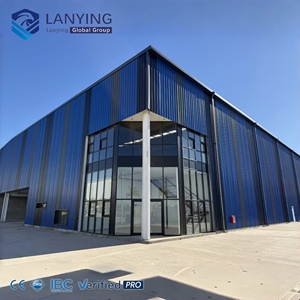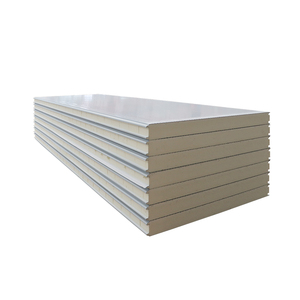
Eco-Friendly Water Resistant Insulated PU Sandwich Panels Cold Room Wall Warehouse
High-density polyurethane core panels designed for airtight thermal envelope construction, damp-proofing, and energy-conserving industrial freezer walls.
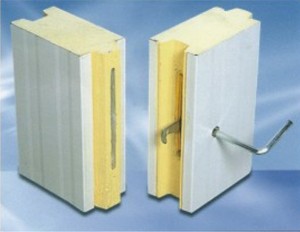
A comprehensive architectural portfolio engineered to eliminate moisture intrusion, mitigate thermal bridging, and deliver structural integrity under extreme dynamic wind loads across commercial, cold storage, and heavy industrial facilities.
High-density polyurethane core panels designed for airtight thermal envelope construction, damp-proofing, and energy-conserving industrial freezer walls.
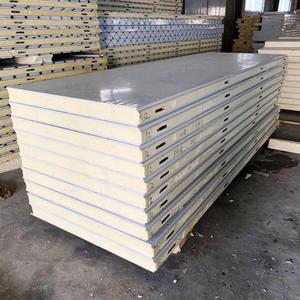
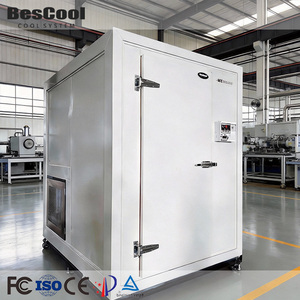
Tongue-and-groove cam-lock engineered sandwich panels serving low-temperature walk-in rooms with zero vapor diffusion and heavy surface load handling.
Continuous line laminated polyurethane panels offering λ ≤ 0.022 W/m·K, tailored for long-span roof runs and high-ceiling refrigerated distribution hubs.
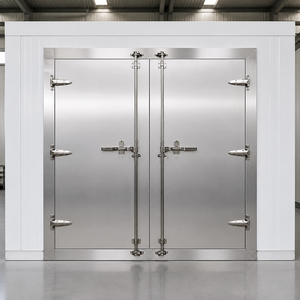
Heavy-duty anti-corrosive stainless steel swing door systems with thermal break seals, heavy hardware, and internal safety release latches for food hubs.
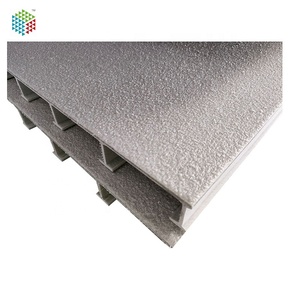
Pultruded fiberglass reinforced plastic deck boards exhibiting high strength-to-weight ratios, chemical resistance, and non-conductive weather durability.
Integrated modular cold envelope system featuring high-density insulated wall-to-roof transitions, condensation barrier flashings, and sanitary base trimmings.
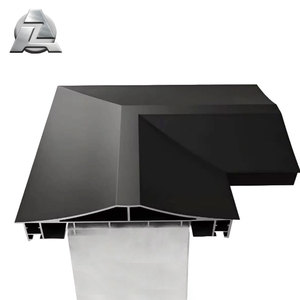
Precision CNC formed parapet capping and hemmed roof drip edges providing critical water deflection, capillary break protection, and wind uplift resistance.
Engineered structural frames with solid H-beams, C/Z purlins, and full perimeter flashing trims designed to South Korean seismic and wind code parameters.
The Republic of Korea’s construction and industrial envelope sectors are undergoing rapid modernizations driven by high-efficiency logistics mega-hubs in Gyeonggi-do, smart factory developments around Cheonan and Pyeongtaek, and modern maritime facilities in Busan and Incheon. Sourcing precision roof drip edges, rake flashings, and insulated envelope transitions from China has evolved from a pure cost-arbitrage exercise into a strategic supply chain alignment.
Leveraging direct container line routes departing from Qingdao, Tianjin, and Shanghai ports, delivery transit times to Incheon Port (인천항) and Busan Port (부산항) are clocked at just 48 to 72 hours. This geographic proximity enables South Korean general contractors and panel roll-forming contractors to execute just-in-time (JIT) site installations while maintaining access to advanced CNC bending centers capable of fabricating custom roof drip edge profiles in 3.0m to 6.0m continuous seamless runs.
Fabrication within 7 working days, followed by 3-day ocean crossing to Incheon CFS or Busan Bonded Warehouses.
Full availability of Galvalume (AZ150), PosMAC equivalents (Zn-Al-Mg), and Grade 3004 Aluminum Alloy for marine environments.
Direct fabrication per shop drawings submitted by Korean architectural firms, complete with notched kick-outs and factory hems.
A technical teardown of drip edge geometry, capillary water break engineering, wind uplift performance, and substrate selections designed to satisfy South Korea’s rigorous building standards.
The roof drip edge plays a foundational role in boundary envelope protection. Our CNC cold-bending machines produce classic T-Style (gutter overhang), L-Style extended deck trims, and C-Channel fascia edge wraps. Crucially, each piece integrates a 15° outward drip kick-out with a continuous 180° hemmed edge, breaking the surface tension of water droplets and preventing dangerous capillary backflow beneath the roofing underlayment.
Roof drip edge profiles manufactured for the Korean market utilize certified cold-rolled metallic substrates conforming to KS D 3506 (hot-dip galvanized steel) and KS D 3770 (pre-painted hot-dip 55% aluminum-zinc alloy-coated steel sheets). For heavily aggressive marine environments such as Incheon, Mokpo, and Busan harbors, we supply Zinc-Aluminum-Magnesium (ZAM / PosMAC equivalent) coatings that offer superior edge self-healing protection.
Coating integrity is vital under South Korea’s alternating hot-humid monsoons and freezing Siberian winter cycles. Our profiles are coated with advanced fluoropolymer resin systems, including 70% Kynar 500 / Hylar 5000 PVDF (Polyvinylidene Fluoride) or High Durability Polyester (HDP). This coating matrix withstands extensive cyclic condensation, severe UV weathering, and exceeds 1,500 hours of continuous salt-spray exposure testing (ASTM B117 / KS D 9502).
| Substrate Material | Korean Standard (KS) Equiv. | Coating Mass / Thickness | Yield Strength (MPa) | Corrosion Resistance Class | Primary Korean Target Applications |
|---|---|---|---|---|---|
| Hot-Dip 55% Al-Zn (Galvalume) | KS D 3770 / SGLC | AZ150 (150 g/m² dual face) | ≥ 300 MPa | High (C3/C4) | Standard industrial parks, Inland logistics warehouses (Gyeonggi-do, Chungcheong) |
| Zinc-Aluminum-Magnesium (ZAM) | PosMAC Equivalent Grade | ZM180 - ZM275 | ≥ 350 MPa | Extreme Marine (C5-M) | Coastal container ports, Incheon Harbor, Busan logistics hubs, Jeju Island installations |
| Pre-Painted Galvanized Steel (PPGI) | KS D 3506 / CGCC | Z275 (275 g/m² zinc) | ≥ 280 MPa | Moderate (C2/C3) | Commercial showrooms, agricultural retail centers, dry-climate industrial roofing |
| Architectural Aluminum 3004/3105 | KS D 6701 / A3004P | 0.7mm – 1.2mm Bare/PVDF | ≥ 180 MPa | Salt Spray Proof (C5) | Chemical processing plants, high-salinity fishing harbor freeze sheds, cleanrooms |
* All material testing protocols conform to KS (Korean Industrial Standards) and ASTM international wind uplift / coating adhesion parameters.
Deploying exterior metal components in South Korea requires engineering against intense seasonal moisture, Siberian sub-zero cold, and severe typhoon wind gusts along the southern seaboard.
The East Asian summer monsoon (장마) brings torrential, multi-week downpours. Conventional eave flashings often suffer from water ponding and overflow. Our drip edges are fabricated with deep vertical drops and pre-punched expansion slots to manage massive hydraulic volume without backing up beneath metal panels.
Typhoons striking the southern coastal regions (Jeju, Busan, Tongyeong) generate wind speeds exceeding 45–55 m/s. Our drip edges feature thickened flanges and continuous lock-cleat accessories tested under dynamic wind pressure to resist eave peel back and roof edge failure.
Korean winter temperatures routinely plummet below -15°C across Gangwon-do and Gyeonggi-do. Water trapped behind eave flashings freezes and expands, cracking caulking joints. The 180° hemmed drip kick-out sheds moisture rapidly before freezing occurs.
Under the updated South Korean Building Act (건축법 시행령) regarding fire prevention, commercial facades and roofing transitions must adhere to strict fire-safe, non-combustible materials. All our metal trims, steel backings, and core transitions meet Korean non-combustible criteria (KS F 2271).
Backed by a multi-acre intelligent fabrication complex, we operate continuous sandwich panel continuous production lines alongside 12 automated roll-forming machines and computerized 6-meter hydraulic bending brakes. Our factory outputs over 10,000 square meters daily of thermal sandwich panels, cold-formed purlins, and custom architectural roof drip edges.
Every single trim order bound for South Korea undergoes pre-dispatch laser dimensional checks, paint film thickness audits (DFT ≥ 25μm), and zero-defect protective peeling film lamination. We provide Korean clients with full project batch traceability, Mill Test Certificates (MTC), and customized sea freight bundling utilizing wooden export crates with moisture-absorbent desiccant packs.
We import DWG/DXF drawings directly into our CNC folding machines for 100% profile accuracy.
Co-extruded UV-resistant PE protective film guarantees zero scratches during sea freight and on-site fitting.
Fast loading from factory to Qingdao Port with daily sea-link bookings to Incheon and Busan.
Strict internal QA with third-party test verification (SGS/TÜV) conforming to international building envelopes.
In-depth responses to the exact regulatory, logistical, and technical queries raised by South Korean structural contractors, trading houses, and façade engineers.
Whether you require standard T-style drip edges in Galvalume AZ150, PosMAC-grade marine flashing systems, or complete prefabricated building envelope packages, our engineering team is ready to analyze your project specifications and supply competitive FOB/CIF Incheon/Busan pricing.
Our sales engineers respond to project questions during working hours (GST+4).