Class A1 Fireproof
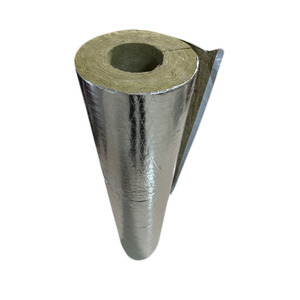

Manufactured from natural basalt rock spun into dense, water-repellent fibers, our structural sandwich panels and acoustic boards provide class-leading fire suppression, sound damping, and energy efficiency for commercial and industrial envelopes.
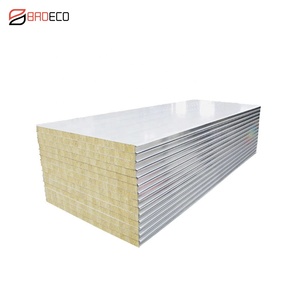
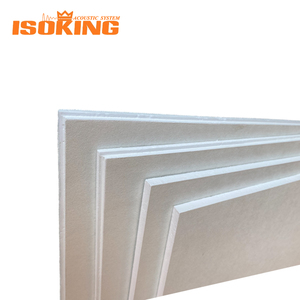
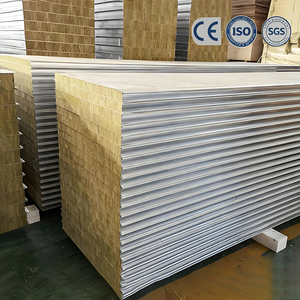
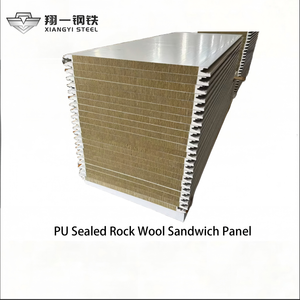
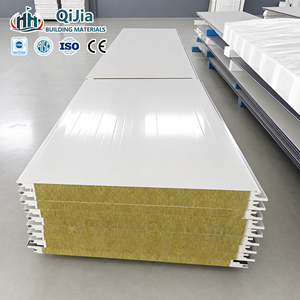
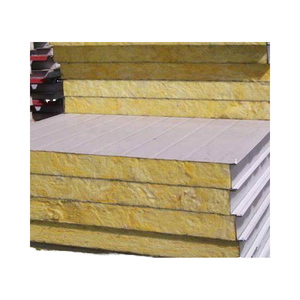
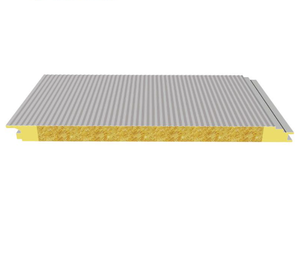
Navigating the stringent requirements of the 2022/2024 New York City Building Code and NYC Fire Department (FDNY) regulations requires an objective understanding of core material performance under high thermal and structural stress.
| Performance Criteria | High-Density Mineral Wool (Rockwool) | Polyisocyanurate (PIR) | Polyurethane (PUR) | Expanded Polystyrene (EPS) |
|---|---|---|---|---|
| Combustibility Standard | Non-Combustible (ASTM E136 / A1) | Combustible (Chars, Class B1/Class A) | Combustible (Chars, Class B2) | Combustible (Melts & Drops, Class B3) |
| Flame Spread Index (ASTM E84) | 0 – 5 (Safest Class A) | 20 – 25 (Class A border) | 25 – 45 (Class B) | > 25 (Requires flame retardants) |
| Smoke Developed Index | 0 – 5 (Near Zero Toxic Fumes) | 150 – 350 (Heavy dark smoke) | 200 – 400 (Toxic gas hazard) | > 400 (Dense toxic black smoke) |
| Fire Endurance (Hours) | Up to 4 Hours (Maintains structural integrity) | 1 Hour max (Integrity degrades) | < 30 Minutes before core failure | Rapid melting; 0-hour barrier |
| Thermal Conductivity (λ) | 0.038 – 0.042 W/m·K (R-4.0 per inch) | 0.020 – 0.023 W/m·K (R-6.5 per inch) | 0.024 – 0.028 W/m·K (R-5.8 per inch) | 0.036 – 0.040 W/m·K (R-3.8 per inch) |
| Acoustic Insulation (STC) | STC 34 – 52 dB (Dense open-fiber matrix) | STC 24 – 28 dB (Closed cell, rigid) | STC 23 – 27 dB (Reflects vibration) | STC 20 – 24 dB (Poor sound absorption) |
| NYC Building Code Fit | Type I & II High-Rise Facades & Firewalls | Low-rise industrial with thermal priority | Secondary cold-chain partition | Strictly limited in NYC Urban Zone |
From midtown Manhattan commercial high-rises to outer-borough logistics terminals along the I-278 and I-87 corridors, our mineral wool composite panels solve complex fire, thermal, and acoustic challenges.
In high-density commercial towers throughout Manhattan and Downtown Brooklyn, our basalt stone wool boards serve as non-combustible perimeter fire barriers and spandrel backer panels, preventing vertical flame spread between floor slabs in compliance with NYC BC Chapter 7.
E-commerce fulfilment centers and distribution warehouses in Queens, the Bronx, and Staten Island utilize our structural sandwich wall panels to establish 2-hour and 4-hour rated area separation firewalls between warehouse storage, battery rooms, and office suites.
Projects adjacent to JFK/LaGuardia flight paths, MTA commuter rail lines, and elevated expressways rely on our perforated metal face acoustic mineral wool panels. The multi-directional fibrous labyrinth absorbs mid-to-high frequency reverberations, delivering up to STC 52 isolation.
Upgrading aging brick and steel structures across Long Island City and Harlem to meet strict building carbon emissions limits. Our vapor-permeable mineral wool continuous insulation prevents interior moisture condensation while slashing thermal envelope transmission losses.
The New York construction sector is undergoing the most radical regulatory transformation in its history. Between the 2022 New York City Construction Codes and the aggressive emissions caps enforced by Local Law 97 (LL97), specifiers can no longer rely on combustible plastic foam insulation without incurring immense insurance penalties and compliance headaches.
Our stone wool insulated composite panels eliminate regulatory friction. Because basalt mineral fiber is naturally inorganic and non-combustible without toxic chemical additives, it complies effortlessly with both NYC Department of Buildings (DOB) Chapter 26 combustible restrictions and Chapter 7 fire containment protocols.
Direct weekly container shipping to Maher Terminals (Elizabeth, NJ) and APM Terminals (Port Newark) with streamlined customs bonded processing, bypassing third-party freight middlemen.
Specialized silicone-emulsion treatment ensures >98% water repellency rate under ASTM C1104, preventing mold growth in humid coastal New York harbor environments.
Precision CNC tongue-and-groove joint profiles with integrated factory-applied butyl sealants achieve superior air infiltration barriers (<0.06 cfm/ft² at 75 Pa).
With decades of continuous manufacturing expertise, high-volume production lines, and delivery track records spanning 550+ premier infrastructure projects globally, we bring structural precision and cost certainty to US trade partners.
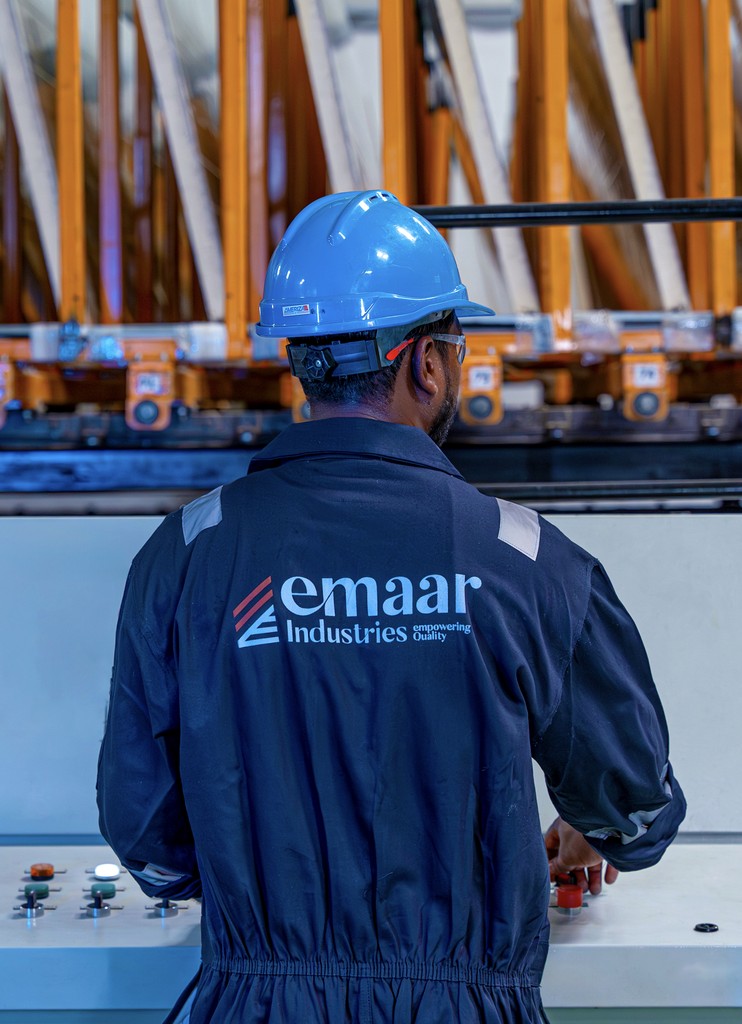
Our continuous automated laminating line executes uniform adhesive application, high-density fiber slitting, and steel skin profiling with ±0.5mm tolerances for rapid field erection.
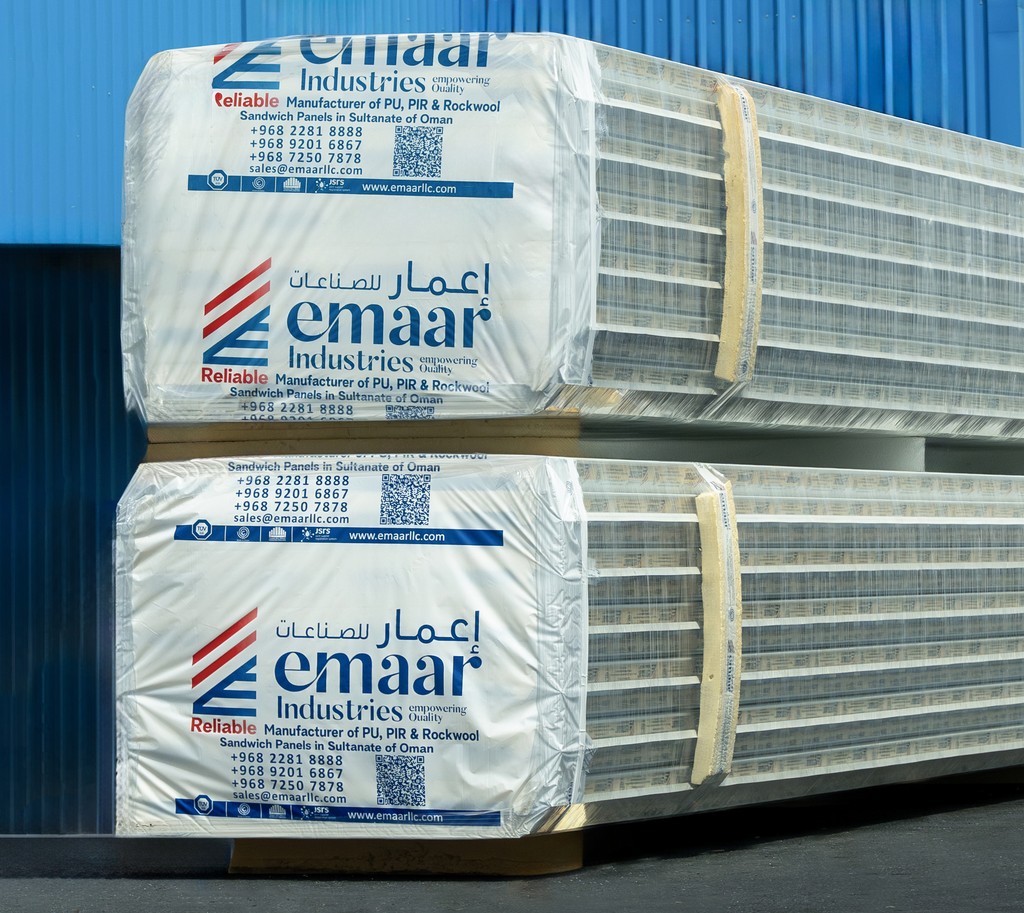
Export packaging reinforced with heavy protective films and ocean-grade edge buffers. Direct shipping lines service the Eastern Seaboard via Port of New York & New Jersey with full documentation.
Every production batch undergoes destructive tensile adhesion, shear modulus, density verification, and flame tunnel tests. Mill Test Certificates (MTC) accompany every container bill of lading.
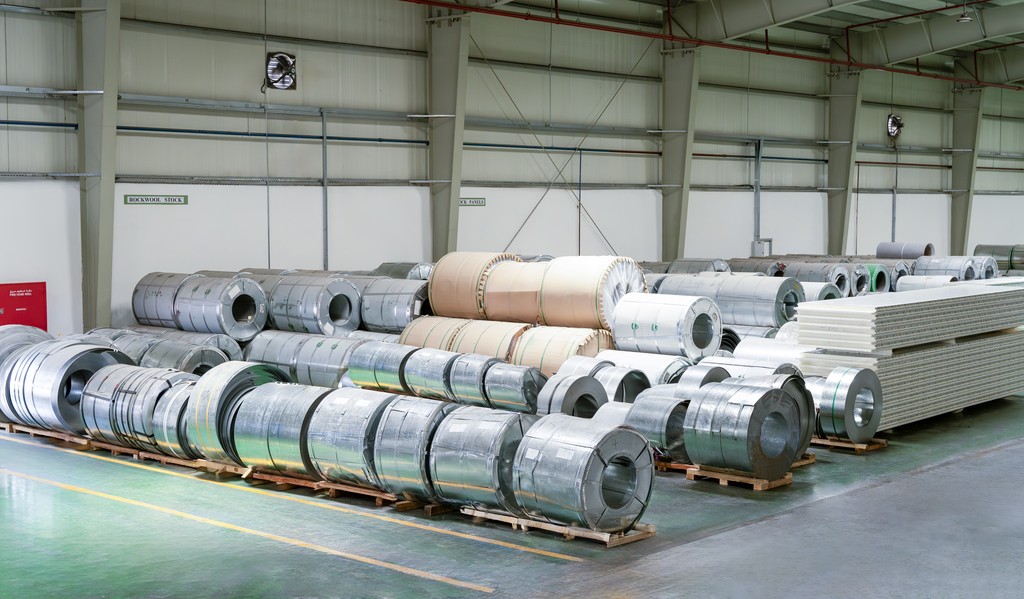
Available in heavy gauge G90 galvanized, Galvalume (AZ150), and PVDF coatings resistant to coastal acid rain, salt mist, and urban airborne pollutants common across the NYC maritime estuary.
Inspect our manufacturing line standards, automated packaging, and global commercial and industrial envelope installations.
Fully compliant with ASTM, ISO 9001/14001, and CE standards for rapid consultant and NYC DOB approval submittals.

Clear, engineering-focused answers regarding code compliance, structural engineering, acoustic isolation, and logistics delivery to New York construction sites.
Speak directly with our technical engineering desk. Receive detailed submittal packages, ASTM test reports, project-specific CAD joint details, and factory-direct CIF New York pricing.
Our sales engineers respond to project questions during working hours (GST+4).