
Constructing an airtight, thermally continuous walk-in cooler requires uncompromised structural integrity, verified core insulation, and hermetic perimeter closures. Explore our certified building envelope components specified for high-performance Iberian installations.
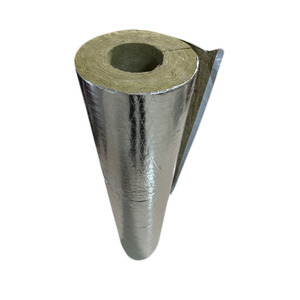
Hydrophobic, non-combustible A1 stone mineral wool insulation with high compressive resistance. Ideal for industrial refrigeration fire breaks and pipe wall pass-throughs.
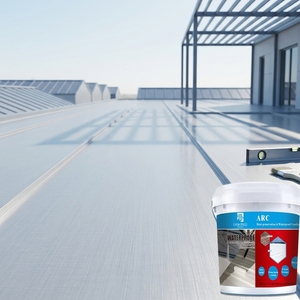
Elastomeric, high-UV-reflective cold-applied seamless coating engineered to seal metal joint seams and gutter perimeters on refrigerated packhouse structures.
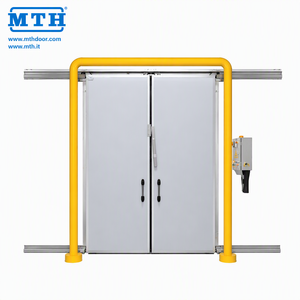
Heavy-duty food-grade AISI 304 stainless steel sliding door utilizing an Italian MTH patented drop-rail track, integrated internal safety release, and heating resistance cable.
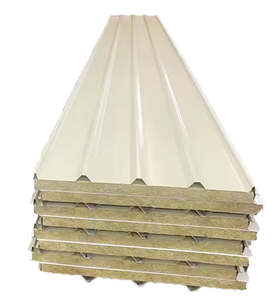
Continuous corrugated insulated roof sandwich panels providing exceptional acoustic damping, fire containment, and moisture-barrier performance for commercial cold logistics.
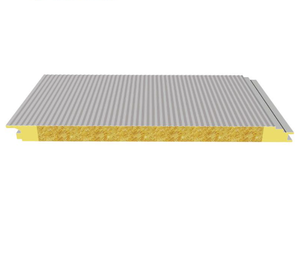
Structural mineral wool core panels fabricated for external cold storage shells and internal division barriers requiring strict compliance with Portuguese SCIE fire regulations.
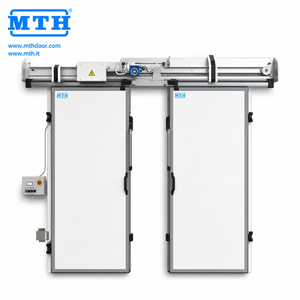
Programmable automated heavy-traffic sliding door fitted with radar activation, dual-speed drive inverter, and high-density polyurethane core to minimize cold-air exfiltration.
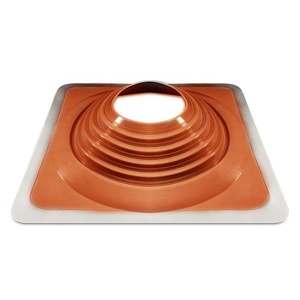
Flexible ozone-resistant EPDM flashing cuffs with malleable aluminum ring bases, designed to seal refrigeration piping penetrations across corrugated cooler roofs.
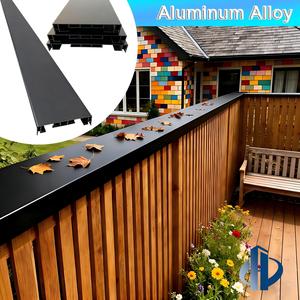
Precision-bent marine-grade coated aluminum drip edges and joint corners engineered to eliminate capillary water intake and maintain thermal envelope continuity.
Procuring a high-performance commercial walk-in cooler or industrial refrigerated warehouse for the Portuguese territory requires an advanced understanding of Iberian microclimatic variations. Portugal presents two distinctly demanding climatic dynamics: the intense, salt-laden Atlantic marine environment characterizing coastal distribution centers from Viana do Castelo, Leixões, and Aveiro down to Sines and Portimão; and the extreme continental heat cycles prevalent in the interior valleys of Alentejo, Ribatejo, and Trás-os-Montes, where exterior ambient dry-bulb temperatures routinely exceed 42°C during summer harvest peaks.
In coastal logistics hubs, walk-in cold rooms constructed with substandard cladding succumb rapidly to galvanic pitting and edge-creep oxidation. Marine chloride deposition attacks panel seams, hinge assemblies, and fastener penetrations, compromising thermal continuity and causing vapor barrier failure. To safeguard cold rooms against premature failure, our manufacturing lines incorporate specialized metallic substrate configurations, utilizing hot-dip galvanized steel (Z275 to Z350) or 55% Aluminum-Zinc (Aluzinc AZ150) protected by heavy-duty 50-micron polyfluorinated vinylidene (PVDF) or high-build plastisol coatings engineered to meet corrosion resistance class C4 and C5-M under ISO 12944.
Simultaneously, Portugal's integration within the European Union's updated Energy Performance of Buildings Directive (EPBD) and national building envelope decree laws (Decreto-Lei n.º 101-D/2020) imposes rigorous thermal transmittance (U-value) thresholds on temperature-controlled spaces. A persistent challenge in walk-in cooler installations across Lisbon and Porto is interstitial condensation. High relative humidity (often >85% RH along the Tagus estuary and Douro coast) combined with poorly insulated floor-to-wall interfaces causes chronic moisture condensation, mold colonization, and hazardous perimeter ice buildup. Overcoming these operational liabilities requires precision cam-locked polyurethane (PUR) or polyisocyanurate (PIR) modular panels with tongue-and-groove labyrinth joints sealed with non-degrading butyl mastic.
From Douro wine maturation cellars to Matosinhos seafood handling hubs, our walk-in coolers and thermal envelopes are customized to the operational demands of Portuguese enterprises.
Precision temperature stabilization walk-in rooms engineered for premium Portuguese wines (Vinho Verde, Douro DOC, Port wine). Maintaining stable maturation environments at +12°C to +15°C with controlled relative humidity (70–80% RH) to preserve barrel integrity and bottle aging.
Aggressive maritime environments require walk-in freezers (-25°C to -35°C) and cold holding rooms with seamless AISI 304/316 stainless steel interiors. Fully washdown-tolerant with chemical biocides, resisting high salt concentrations from codfish handling and fresh catch icing.
Hermetically sealed cold rooms purpose-built for the storage of Pêra Rocha do Oeste and citrus harvests. Ultra-low gas permeability joints, positive pressure integrity, and thick thermal barrier envelopes (up to 150mm PIR) designed to run minimal defrost cycles, preventing moisture loss.
Compact, hygiene-certified walk-in coolers and dual-compartment chill/freeze walk-ins configured for premium restaurants, luxury coastal resorts, and urban delivery commissaries. Featuring flush cove bases, anti-slip checkered aluminum flooring, and MTH magnetic gasket doors compliant with Portuguese food safety authority (ASAE) audits.
GDP (Good Distribution Practice) compliant cold rooms engineered for vaccine and biologic API preservation (+2°C to +8°C and -20°C deep freeze). Built with redundant refrigeration integration, thermal bridge-free ceiling suspensions, and continuous temperature logging data-ports matching Infarmed specifications.
Compare panel core characteristics and technical parameters to accurately specify insulation envelopes compliant with EN 14509 and Portuguese Civil Fire Regulations (SCIE).
| Insulation System | Core Density | Thermal Cond. (λ) | Euroclass Fire Rating | Typical Thickness in Portugal | Ideal Regional Application |
|---|---|---|---|---|---|
| PIR Elite (Polyisocyanurate) | 40 - 42 kg/m³ | 0.020 - 0.022 W/m·K | B-s1, d0 (Self-extinguishing) | 80mm to 120mm (Chiller) 150mm to 200mm (Freezer) |
Distribution logistics in Alentejo & Lisbon; automated high-bay freezers. |
| PUR Standard (Polyurethane) | 38 - 40 kg/m³ | 0.023 - 0.025 W/m·K | B-s2, d0 / B-s3, d0 | 60mm to 100mm (Chiller) 120mm to 150mm (Freezer) |
Commercial HORECA walk-in coolers in Algarve, regional butcheries & retail. |
| High-Density Rockwool Core | 100 - 130 kg/m³ | 0.038 - 0.042 W/m·K | A1 / A2-s1, d0 (Non-combustible) | 100mm to 200mm | Fire separation walls in industrial hubs, airport cold chain, multi-tenant units. |
| Marine-Grade AISI 304/316 Clad | PU/PIR Core Integrated | 0.021 W/m·K (System) | B-s1, d0 (Laminated) | 100mm to 150mm | Seafood freezing at Sines, Peniche & Leixões ports; pharmaceutical rooms. |
The confluence of stringent environmental directives, soaring power costs, and technological digitization is transforming commercial refrigeration requirements across Portugal.
Portugal strictly implements EU Regulation 2024/573, which aggressively accelerates the quota phase-down of fluorinated greenhouse gases (HFCs). Commercial operators are rapidly transitioning to Transcritical CO2 (R744) and Propane (R290) condensing units. Because natural refrigerant cycles operate at higher discharge pressures and elevated thermodynamic sensitivity, insulated walk-in enclosures must provide absolute airtightness and eliminate micro-leakages that strain system efficiency.
With regions such as Alentejo and the Algarve boasting over 2,800 to 3,000 peak solar sunshine hours annually, cold storage operators are pairing industrial walk-in freezers with rooftop photovoltaic arrays. To maximize economic viability, cold storage rooms are utilized as "thermal batteries"—subcooling products during peak solar generation hours. This strategy demands ultra-low thermal dissipation (U < 0.15 W/m²·K) to retain cooling overnight without supplemental grid draw.
The Portuguese National Civil Protection Authority (ANEPC) enforces stringent fire compartmentation standards for commercial establishments under the SCIE regulations. Specifiers of walk-in coolers in densely occupied hotels, malls, and industrial buildings are required to replace legacy EPS/combustible insulation with Euroclass B-s1,d0 PIR or non-combustible A2-s1,d0 structural Rockwool panels that generate minimal smoke emissions during thermal events.
Combining multi-decade engineering expertise, advanced continuous double-belt lamination, and dedicated export logistics serving the Iberian Peninsula.
Our continuous automated lamination line delivers up to 10,000 m² daily with uniform cyclopentane high-pressure foam injection, guaranteeing consistent density (40-42 kg/m³) and zero internal voids across panels up to 16 meters in length.
Every sandwich panel and door assembly manufactured leaves the factory backed by rigorous third-party testing in accordance with EN 14509, complete with CE marking, factory production control documentation, and full batch traceability.
We eliminate sourcing fragmentation by providing an end-to-end building solution: insulated wall and ceiling panels, heavy-duty insulated cold room doors, structural flashings, floor thermal break profiles, and acrylic roof sealing compounds.
Streamlined maritime container dispatch directly to the Port of Sines and Port of Leixões (Porto). All ocean-bound panel crates are packed with reinforced corner protectors, desiccant barriers, and heat-treated ISPM 15 timber skids for secure transit.
Answers to common structural, regulatory, and logistics queries encountered when sourcing walk-in coolers for Portuguese facilities.
Whether you are designing a controlled-atmosphere cold store for agricultural cooperatives in Ribatejo or an automated distribution center in Sintra, our engineering group will prepare detailed bill-of-materials, thermal insulation schedules, and competitive factory pricing for the Portuguese market.
Contact UsOur sales engineers respond to project questions during working hours (GST+4).