
Precision-manufactured building envelope solutions engineered for extreme heat, coastal humidity, and heavy mechanical loading across modern commercial and logistics developments.
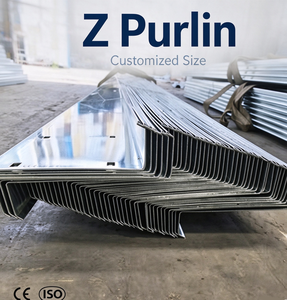
In modern pre-engineered steel buildings (PEB), light steel purlins form the critical secondary structural bridge that transfers roof and wall dead loads, live construction loads, seismic dynamics, and wind suction pressures directly into primary structural portal frames. Precision roll-formed from high-tensile hot-dip galvanized steel coil, cold-formed steel (CFS) C and Z purlins deliver an exceptional strength-to-weight ratio compared to obsolete hot-rolled structural channels. By exploiting the post-buckling reserve strength inherent in thin-walled steel profiles, design engineers can optimize framing self-weight by up to 38% without compromising structural integrity or deflection compliance under international building codes (including Eurocode 3 EN 1993-1-3 and AISI S100).
Our factory roll-forming lines leverage continuous cold-roll deformation technologies that systematically minimize internal residual stresses while inducing work-hardening at profile corners. This strain-hardening phenomenon measurably elevates the localized yield point of the raw structural coil, yielding superior flexural resistance against torsional buckling and lateral-torsional instability. Whether delivering for mega-scale automated logistics centers, high-span airport hangars, or agro-industrial storage across the Middle East and African trade corridors, our OEM/ODM purlin production lines meet the most rigorous dimensional tolerances: web squareness within ±1.0 mm, hole punch center deviations under ±0.5 mm, and longitudinal straightness within 1/1000 of member length.
Atmospheric longevity in aggressive environments—such as coastal marine zones, chemical storage facilities, or high-humidity desert climates—is fundamentally dictated by the metallic coating matrix applied to the structural steel substrate. We supply high-tensile structural strip compliant with ASTM A653, ASTM A1003, and EN 10346, utilizing standardized steel grades from S350GD+Z to S450GD+Z (minimum yield strengths of 350 MPa to 450 MPa).
Continuous hot-dip pure zinc coating (275 g/m² combined both sides) offering sacrificial galvanic protection, ideal for standard industrial environments with balanced C2/C3 humidity exposure.
55% Aluminum, 43.4% Zinc, and 1.6% Silicon alloy formulation creating a dual microscopic barrier: zinc galvanic cut-edge self-healing coupled with aluminum oxide high-temperature oxidation impedance.
Next-generation quaternary alloy system (e.g., ZM310) providing up to triple the salt-spray resistance of standard galvanization, particularly resistant to chloride and ammonia pitting in fertilizer hubs.
The decision between Cold-Formed C-sections and Z-sections depends primarily on structural continuity, rafter span architecture, roof pitch, and mechanical cladding integration. Z-purlins are rolled with slightly asymmetric flanges (typically 60 mm top flange and 53 mm bottom flange at identical 135-degree lip angles), enabling seamless face-to-face nesting over intermediate frame rafters. This nesting capability creates a continuous structural beam system over two or more spans, which drastically reduces mid-span bending moments by up to 40% compared to simply supported beams.
| Profile Model | Web Depth (mm) | Flange Width (mm) | Thickness Range (mm) | Max Unbraced Span (m) | Optimal Primary Application |
|---|---|---|---|---|---|
| Z140 - Z180 Series | 140 – 180 | 50 / 58 (Lapped) | 1.5 – 2.0 | 6.0 m Span | Light commercial roofing, agricultural canopies, secondary side girts. |
| Z200 - Z250 Series | 200 – 250 | 65 / 72 (Lapped) | 1.8 – 2.5 | 7.5 – 9.0 m Span | Standard industrial warehouses, logistics distribution centers, heavy sandwich panel framing. |
| Z300 - Z350 Series | 300 – 350 | 85 / 95 (Lapped) | 2.0 – 3.2 | 9.0 – 12.5 m Span | Super-wide bay logistics depots, aircraft hangars, high wind-uplift coastal facilities. |
| C150 - C200 Series | 150 – 200 | 50 – 65 (Equal) | 1.5 – 2.5 | 6.0 – 7.5 m Span | Simply supported wall girts, door and window trimmers, roof perimeter fascia framing. |
| C250 - C300 Series | 250 – 300 | 75 – 85 (Equal) | 2.0 – 3.0 | 7.5 – 9.5 m Span | Heavy vertical facade subframes, internal structural partition framing, mezzanine joists. |
*Note: Load-carrying capacities are calculated based on S350GD structural yield limits under uniform distributed loads (UDL) meeting L/200 total load deflection criteria. Custom web punchings (elongated slots for thermal movement, round holes for sag rods) are automatically punched inline based on clients' Tekla or Revit export schedules.
The global procurement framework for secondary structural steel framing is undergoing a profound paradigm shift driven by digital engineering, supply chain regionalization, and decarbonization mandates. Procurement directors and EPC (Engineering, Procurement, and Construction) contractors must align their sourcing strategies with several overarching developments:
Procurement is moving away from generic bill-of-materials towards direct NC1 and IFC data feeding directly from Tekla BIM models into automated roll-forming mills, cutting site fabrication errors to near zero.
Global environmental metrics require verified Environmental Product Declarations (EPDs). Sourcing now evaluates low-embodied-carbon electric arc furnace (EAF) coil inputs with scrap ratios exceeding 60%.
Extended transit times and volatile ocean freight rates have elevated regional manufacturing hubs (e.g., Oman and GCC) over distant overseas suppliers, guaranteeing overland delivery schedules within 48 to 72 hours.
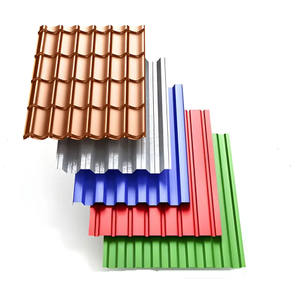
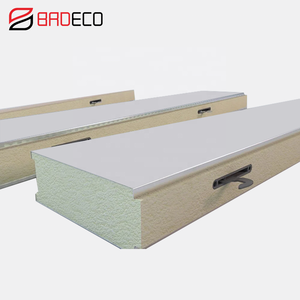
Procurement professionals are increasingly shifting away from transactional purchasing of disconnected items (purlins, sheets, screws, flashings from different vendors) to fully integrated single-source thermal envelope contracts. Sourcing light steel secondary framing alongside compatible insulated sandwich panels (PIR, PUR, Rockwool) eliminates interface risks, guarantees thermal break alignment, and streamlines warranty administration under a single structural guarantee.
Light steel purlin manufacturing has transitioned from labor-intensive manual mechanical presses to fully automated, servo-driven flexible profiling lines. The modern roll-forming line incorporates continuous computer-controlled variable cassette changes, allowing real-time dimension modulation between C and Z configurations within minutes, without requiring mechanical die dismantling.
Inline high-speed hydraulic punching units operate synchronized with rotary servo encoders, punching complex patterns—including web-stiffener notches, elongated connection slots, and staggered anti-sag rod apertures—at rolling velocities of up to 45 meters per minute without stopping the web. Furthermore, continuous optical measurement arrays actively inspect the profiled section for lateral bow, camber, and cross-sectional flare as the steel leaves the final sizing stands, instantly adjusting down-stream roll pressure to maintain strict European (EN 10162) and American standards.
Post-forming passivation and chemical dry-film lubrication protect the micro-fractures of the galvanized zinc skin that naturally occur at sharp corner bends. This inline chemical sealing safeguards the steel's galvanic lifespan in aggressive chemical or salt-laden atmospheres, eliminating the localized rust staining historically common in lower-tier purlin exports.
Operating out of state-of-the-art facilities in Muscat, Oman, our manufacturing complex serves as a primary structural manufacturing hub for contractors, consultants, and project developers across the GCC (UAE, Saudi Arabia, Qatar, Bahrain, Kuwait) and the African continent. We offer an unmatched competitive ecosystem built on operational scale, metallurgical discipline, and complete envelope integration:
Unmatched throughput capacity across high-speed continuous purlin lines and continuous PU/PIR/Rockwool sandwich panel lines ensures short lead times and compressed delivery schedules for fast-track projects.
Proven execution across government cold stores, heavy industrial smelting plants, commercial aviation facilities, and mega-scale logistics hubs exposed to summer ambient temperatures exceeding 48°C.
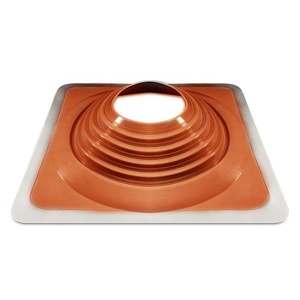
We eliminate subcontractor friction by supplying matched structural systems: C/Z purlins, decking profiles, architectural flashings, and high-performance insulated wall/roof sandwich panels under one warranty umbrella.
Procuring light-gauge structural steel purlins requires careful technical evaluation to ensure structural performance and regulatory compliance. Below are definitive answers to our clients' most frequent engineering and commercial inquiries.
Continuous Z-purlins are designed with asymmetrical flange dimensions (such as 65 mm and 58 mm), allowing them to overlap and nest back-to-back across interior frame rafters. This overlap effectively doubles the steel cross-section at the support zones where negative bending moments are highest. Consequently, nested Z-framing systems carry significantly higher load capacities per kilogram of steel, reduce mid-span deflections, and permit wider main-frame spacing (up to 9 to 12 meters), directly lowering the overall structural framing tonnage of the building.
Every master coil delivered to our profiling facility undergoes standardized laboratory tensile testing (yield point, ultimate tensile strength, and percentage elongation) conforming to ASTM A370 and ISO 6892. Zinc coating thickness is verified using magnetic flux density and electromagnetic measurement tools according to ASTM A90 and ISO 2178. Full 3.1 Mill Test Certificates (MTCs), complete with chemical heat analysis and mechanical parameters, are issued with every project consignment for streamlined consultant submittal and civil defense approvals.
Our CNC punching heads provide fully customized punching patterns executed inline before profiling. Standard configurations include round holes (typically 14 mm, 16 mm, or 18 mm for M12/M16 grade 8.8 structural bolts) and slotted elongated apertures (e.g., 18 mm x 22 mm or 18 mm x 30 mm) positioned in web flanges to accommodate thermal expansion and construction tolerances. Staggered flange holes for bridging systems, anti-sag rods, and fly-brace connections are located based on structural shop drawing coordinates with precision tolerances under ±0.5 mm.
Within 5 kilometers of open marine shorelines, ambient airborne chloride levels dramatically accelerate localized galvanic consumption of pure zinc. For standard C1/C2 dry environments, a Z180 or Z275 coating is fully sufficient. However, for severe marine environments (classified as C4 or C5 under ISO 12944), we recommend either upgrading to high-deposition Z350 / Z450 coatings or adopting advanced Zinc-Aluminum-Magnesium (ZM) alloys such as ZM310. ZM coatings develop a dense, protective simonkolleite patina that cuts corrosion propagation by up to 70% compared to standard zinc coatings of identical thickness.
Wet-storage stain (white rust) occurs when closely stacked galvanized profiles are exposed to trapped moisture in unventilated conditions. Our export packaging protocol includes applying a specialized water-repellent chemical passivation treatment to the rolled strip, followed by automated nesting, protective edge guards, heavy-gauge steel strapping, and waterproof polyethylene wrapping with integrated vapor-corrosion-inhibiting (VCI) desiccant packs. Bundles are timber-dunnaged to facilitate overhead crane and multi-directional forklift handling during container stuffing and flatbed trailer transit.
Yes. Our flexible cassette roll-forming lines allow continuous adjustment across custom web heights ranging from 100 mm up to 400 mm, flange widths from 45 mm to 100 mm, and lip angles from 90 to 135 degrees. Our engineering division regularly assists clients with custom architectural requirements, historical renovations, and high-load solar mounting installations where non-standard sectional profiles are required to meet unique moment-of-inertia specifications.
Consult with our technical engineering team for structural load calculations, custom profile roll-forming schedules, and competitive factory-direct quotations tailored to your regional building code requirements.
Our sales engineers respond to project questions during working hours (GST+4).