
Manufactured on German-engineered continuous double-track laminators. Certified for thermal isolation, airtight joints, zero-thermal-bridging integrity, and heavy snow load performance across Almaty, Astana, and Shymkent.
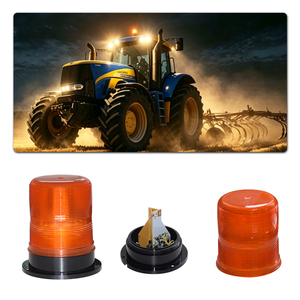
Heavy-duty beacon designed for refrigerated fleet vehicles and snow-route convoys traversing Kazakhstan’s extreme blizzards.
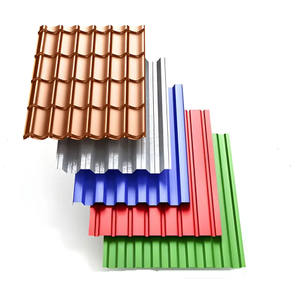
High-tensile zinc-galvanized exterior protective profile sheets engineered to support northern Kazakhstan’s heavy snow accumulation.
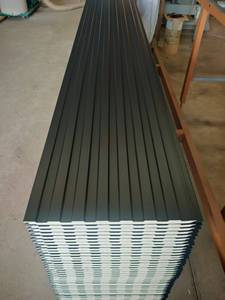
Continuous polyurethane rigid foam core panels offering λ ≤ 0.022 W/m·K thermal barrier for commercial cold logistics envelopes.
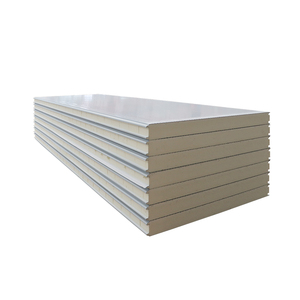
Airtight tongue-and-groove joint profile designed specifically for blast chillers, commercial meat freezers, and dairy hubs.
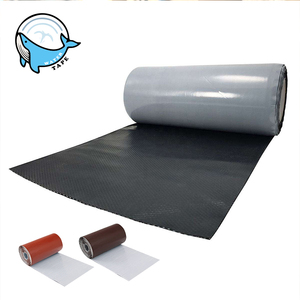
Impermeable butyl adhesive sealing strip preventing moisture infiltration and frost heaving along panel junctions and roof flashings.
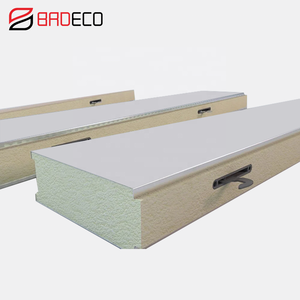
Precision eccentric cam-lock interlocking panels coated with antibacterial food-safe PET/PVDF skins for vaccine and medicine depots.
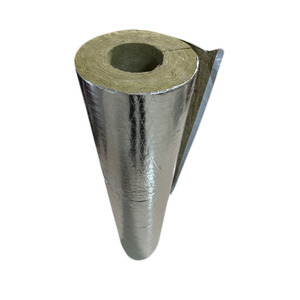
High-density basalt core non-combustible panels engineered for fire separation firewall zones in commercial agro-logistics parks.
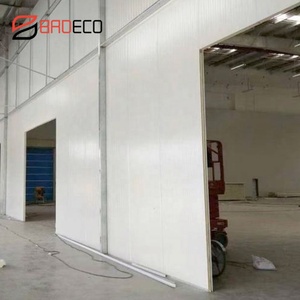
Heavy-gauge internal wall dividers featuring dual-labyrinth joints to maintain distinct multi-temperature compartments under one roof.
Kazakhstan occupies a pivotal transcontinental position at the crossroads of China and Europe, serving as the core logistics land-bridge along the Belt and Road Initiative (BRI). However, designing and erecting commercial cold storage infrastructure across the Kazakh steppe presents severe thermodynamic and mechanical challenges. The local climate is notoriously extreme: ambient winter temperatures plunge to -40°C in Northern and Central regions (Astana, Karaganda, Pavlodar), while summer highs frequently exceed +40°C in Southern agricultural corridors (Shymkent, Turkistan, Almaty). This staggering 80-degree Celsius annual thermal oscillation triggers massive structural expansion and contraction cycles across industrial building envelopes.
When sub-standard insulated panels with inhomogeneous foam densities or inferior joint geometry are deployed, cold storage facilities suffer micro-gaps along panel seams, vapor barrier failure, heavy internal ice formation, and rapid insulation degradation known as thermal bridging. As China’s premier manufacturer and direct exporter of continuous PIR (Polyisocyanurate), PUR (Polyurethane), and Structural Rockwool sandwich panels, our factory engineers thermal solutions specifically designed to eliminate condensation, delamination, and excessive refrigeration compressor runtime under Central Asian environmental loads.
By utilizing automated continuous double-track laminators with multi-component high-pressure cyclopentane foaming, our panels achieve a closed-cell content exceeding 95% and an ultra-low core thermal conductivity of λ = 0.019–0.022 W/m·K. Whether constructing controlled atmosphere (CA) apple warehouses in Almaty, sub-zero meat consolidation centers in Northern Kazakhstan, or pharmaceutical bonded logistics parks in Khorgos Eastern Gate SEZ, our engineered thermal envelopes ensure structural longevity, lowest total lifecycle power consumption, and full regulatory compliance with the Eurasian Customs Union (EAEU) standards.
A comprehensive engineering comparison of core insulation options designed to guide consultants, refrigeration contractors, and agricultural investors in selecting the optimal panel configuration.
| Insulation Core | Density (kg/m³) | Thermal Cond. (W/m·K) | Fire Classification | Moisture Absorption | Optimal Kazakh Application |
|---|---|---|---|---|---|
| PIR-B1 (Polyisocyanurate) | 42 – 45 kg/m³ | 0.019 – 0.021 | EN 13501-1 B-s1, d0 / GOST G1 | < 1.0% by volume | Deep Freezers (-25°C to -35°C), Megawatt Logistics Hubs |
| PUR Rigid Foam | 40 – 42 kg/m³ | 0.022 – 0.024 | B2 / B3 Normal Flammability | < 1.5% by volume | Chilled Agro Storage (+0°C to +8°C), Fruit & Veg Sorting |
| High-Density Rockwool | 100 – 140 kg/m³ | 0.038 – 0.042 | Class A1 Non-Combustible | Water Repellent (>98%) | Fire Separation Walls, Hazardous Chemical & Grain Processing |
| PIR/Rockwool Hybrid | Core-Engineered | 0.024 – 0.028 | Composite Fire Shield | < 1.2% by volume | Multi-Compartment Cold Terminals with Strict Fire Codes |
Our cold storage panel systems are custom-specified to solve regional operational bottlenecks, supply-chain logistics, and severe climate extremes across the Republic of Kazakhstan.
The Zhetysu region is Kazakhstan’s primary horticultural basin. Storing Aport apples, stone fruits, and fresh table vegetables requires gastight CA rooms with precise CO₂ and O₂ pressure retention.
Northern Kazakhstan endures severe winter gales and temperatures sub -40°C. Massive beef processing and poultry preservation plants require zero-energy-leak envelope designs.
The Khorgos Eastern Gate Special Economic Zone handles vast volumes of perishable transshipment between China, Central Asia, and the European Union via the rail dry port.
Southern Kazakhstan experiences scorching summer temperatures above +42°C, causing significant post-harvest losses unless immediate pre-cooling and cold chains are established.
Western Kazakhstan’s Caspian ports face intense saline air, coastal fog, and heavy industrial emissions from oil refining clusters, creating aggressive corrosion risks for metallic structures.
The commercial cold chain logistics sector in Kazakhstan is undergoing a historic structural transformation. Historically reliant on obsolete Soviet-era refrigeration warehouses that feature inadequate insulation, excessive energy consumption, and high operational leakage, the market is urgently pivoting toward modern Grade-A logistics complexes. This boom is propelled by three primary catalysts:
1. National Food Security & Agro-Industrial Modernization: The Government of Kazakhstan has implemented strategic subsidy programs under the "Agribusiness 2025–2030" framework. These policies subsidize capital expenditures for modern vegetable stores and fruit cold warehouses by up to 25–40%, provided the structures meet strict thermal energy preservation standards (SP RK 2.04-106-2012 "Thermal Protection of Buildings").
2. Rapid Penetration of Organized Grocery Retail & E-Commerce: Leading regional retail chains (such as Magnum Cash & Carry, Small, and Galmart) alongside fast-expanding quick-commerce platforms are constructing centralized distribution centers (CDCs). These mega-warehouses require multi-temperature capabilities under a single roof: blast-freezing (-35°C), frozen meat storage (-18°C), dairy preservation (+4°C), and fresh produce cross-docking (+10°C). Such complex internal partitioning requires modular PIR panels with high structural span capabilities to minimize internal steel columns.
3. Belt and Road Transcontinental Rail Freight Acceleration: Rail cargo moving through the Alashankou-Dostyk and Khorgos corridors reached record volumes in 2024. Perishable trade—including high-value pharmaceutical active ingredients, fresh fruits, premium meat, and frozen seafood transiting to Central Asia, Russia, and Europe—necessitates state-of-the-art cold chain staging hubs. Importing continuous PIR/PUR panels directly from our advanced production facilities in China delivers an unbeatable balance of cost efficiency, swift rail transport delivery via direct container cars, and world-class mechanical precision.
Combining world-class German manufacturing automation with strategic overland logistics to Central Asian borders.
Our ultra-long 42-meter continuous heated laminators allow complete pentane curing, ensuring zero voids, exact thickness tolerances (±0.5mm), and exceptional planar smoothness.
We source prime hot-dip galvanized steel from Tier-1 mills (Baosteel/Shougang) with Z275 zinc coatings and 25μm PVDF paints tested for 1,000-hour neutral salt spray resistance.
Factory-direct siding and container staging with direct rail wagons through Alashankou or Khorgos dry ports, delivering to Almaty or Astana customs terminals in as little as 10–14 days.
All exported sandwich panel series hold valid Eurasian Customs Union Declarations of Conformity (TR CU 043/2017 fire safety and TR CU 010/2011 machine safety guidelines).
Specifying the correct panel core thickness is an essential engineering calculation directly dictating daily electrical overhead and compressor lifespan. In Kazakhstan, where electrical heating or massive refrigeration power is continuous, under-specifying panel thickness leads to catastrophic condensation and ceiling icing.
Below is our engineering recommendation based on thermodynamic heat ingress analysis ($Q = U \cdot A \cdot \Delta T$) incorporating local ambient summer extremes of +38°C to +42°C:
Clear, direct answers to common questions asked by general contractors, procurement directors, and agricultural developers importing cold room panels from China into Kazakhstan.
We supply complete export dossiers for smooth customs clearance through Kazakh border checkpoints (Khorgos, Alashankou/Dostyk). This includes the Certificate of Origin (Form A or General), packing lists, commercial invoices with exact HS Codes (typically 730890 for sandwich panels), and verified Eurasian Customs Union (TR CU) compliance certificates matching local Fire Safety and Sanitary norms.
Once continuous production is finalized (usually 7–12 business days for standard orders up to 5,000 m²), cargo is loaded into dedicated 40ft High Cube containers or covered rail cars. Rail transit from our manufacturing terminal to Almaty-1 / Almaty-2 or Astana freight stations takes approximately 10 to 16 calendar days, including gauge-bogie transshipment at the border.
Polyisocyanurate (PIR) undergoes severe cross-linking under high pressure and temperature during continuous production. It produces a rigid carbonized char layer when exposed to flames, achieving B-s1, d0 fire behavior, whereas standard EPS melts and ordinary PUR generates high smoke. Furthermore, PIR’s superior thermal conductivity (0.019–0.021 W/m·K) allows a thinner wall profile, saving expensive warehouse footprint.
Yes. Because our factory operates continuous double-track cutting systems, we cut panel lengths precisely according to your structural shop drawings, from 2.0 meters up to 13.5 meters (for convenient containerized rail shipment) or up to 16 meters for oversized flatbed trucking routes. This reduces on-site transversal panel cutting and scrap waste to absolute zero.
We supply factory-integrated butyl mastic sealant pre-applied inside the female groove of our deep tongue-and-groove joint. When panels are clamped tight during installation, the butyl forms a completely vapor-impermeable gasket. For controlled atmosphere cold rooms and walk-in chillers, we also supply pharmaceutical-grade cam-lock systems and cryogenic sealing tape.
For meat processing, slaughterhouses, and dairy rooms subjected to aggressive daily hot-water high-pressure washdowns and chemical sanitizers, we provide 50μm Food-Safe PVC/PET laminations or stainless steel 304/316 facings. These coatings are non-toxic, anti-microbial, impervious to bacterial buildup, and fully certified for international food safety standards.
Our sales engineers respond to project questions during working hours (GST+4).